PIANO CHAIR
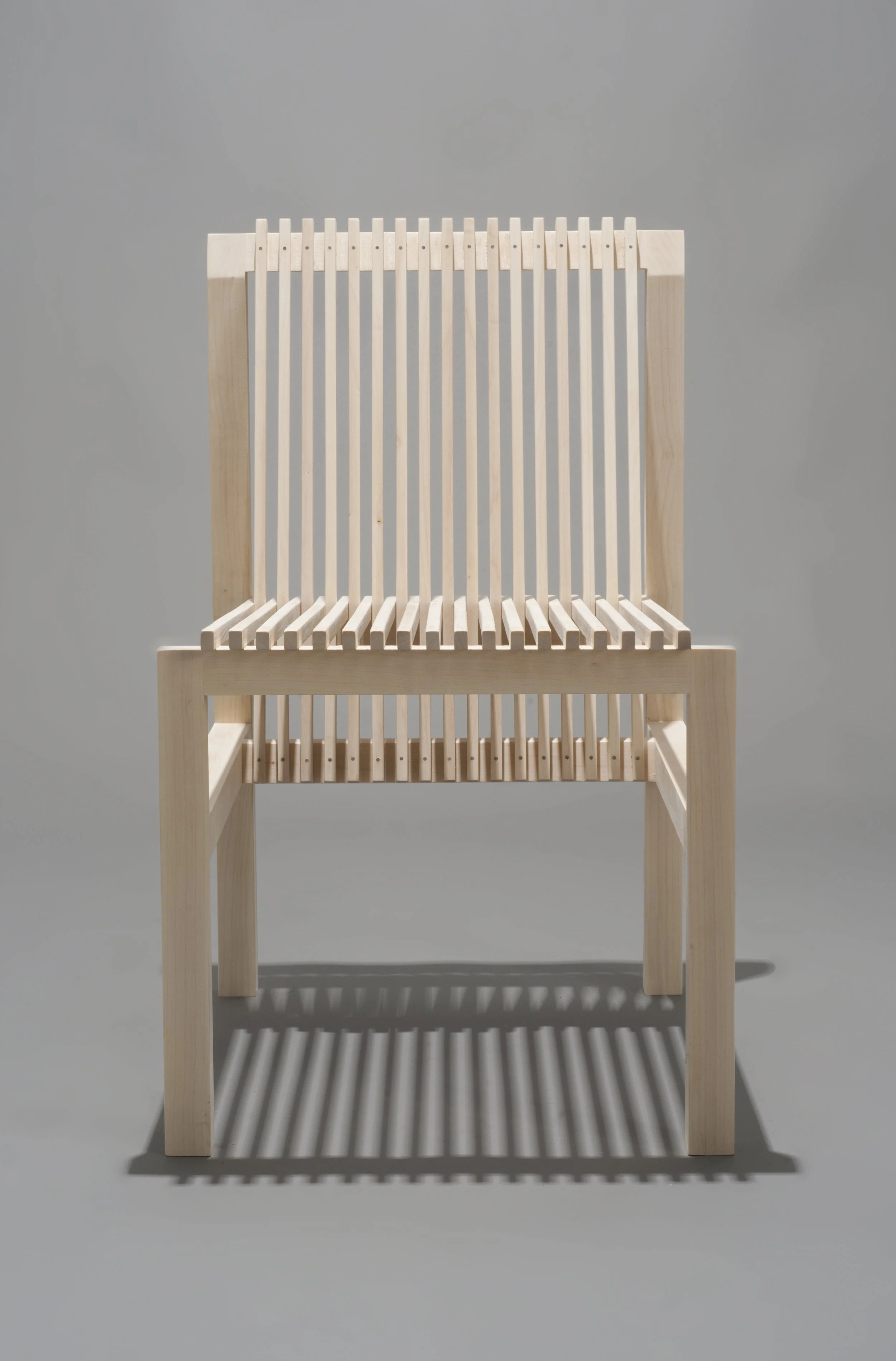
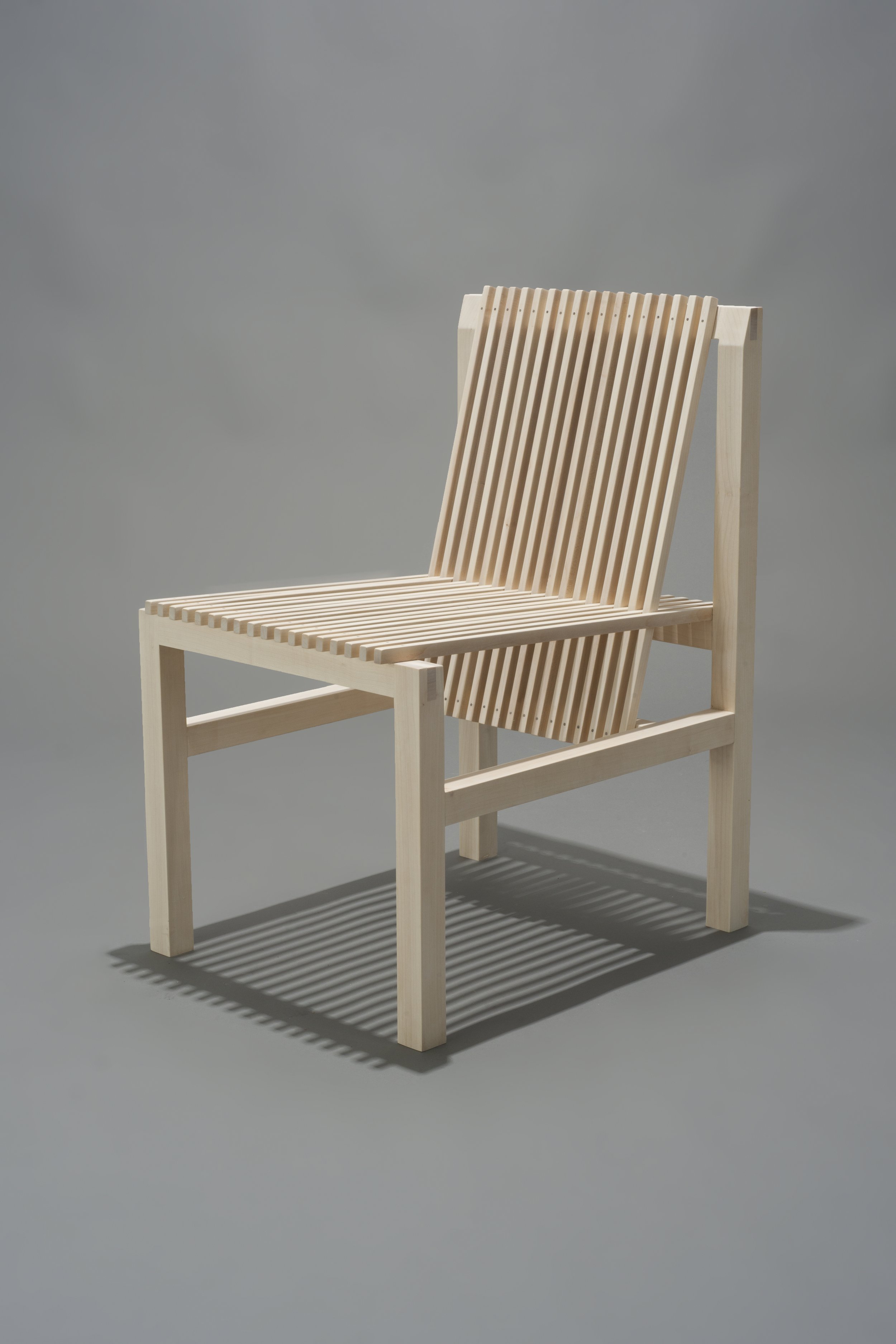
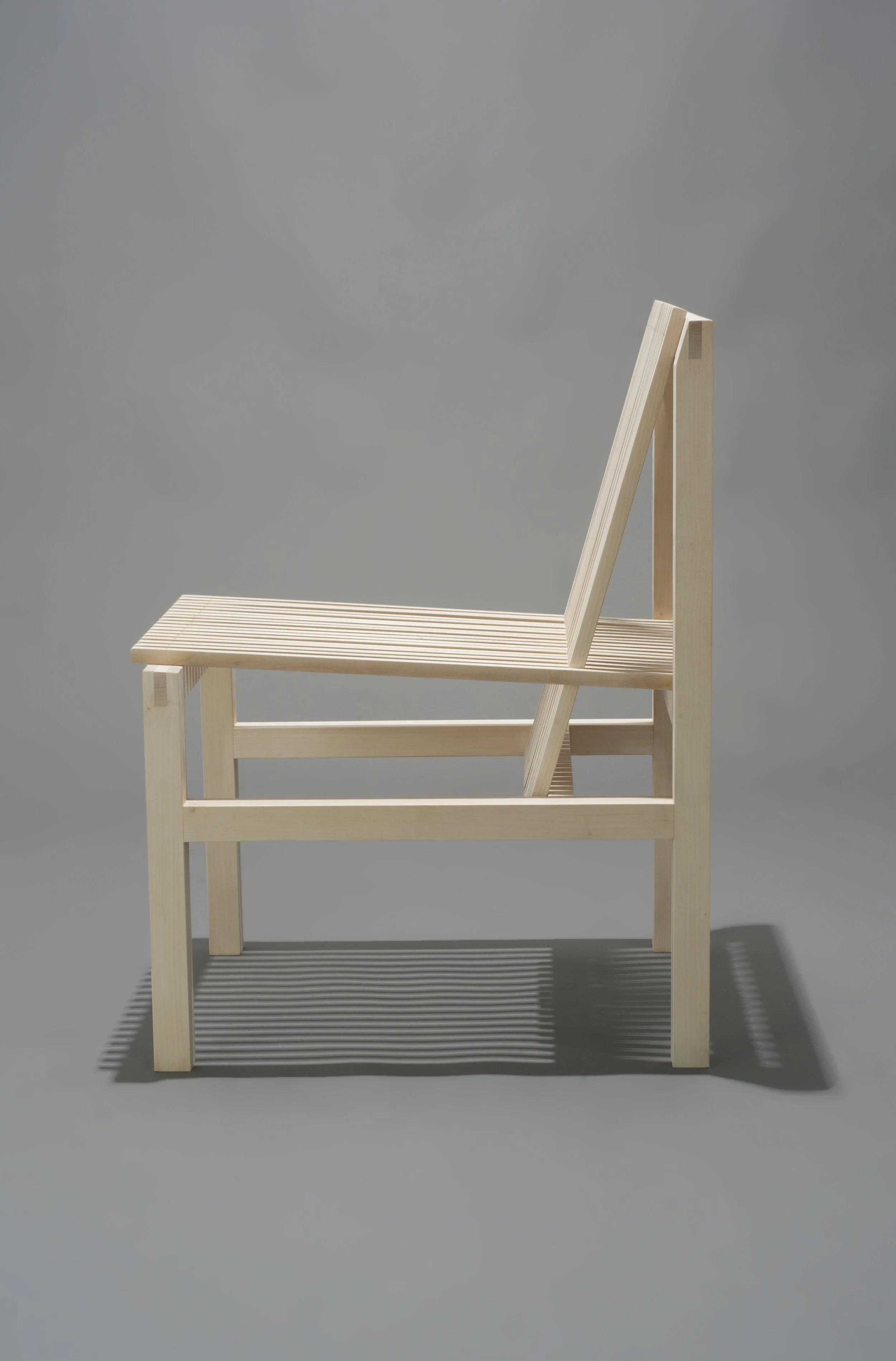
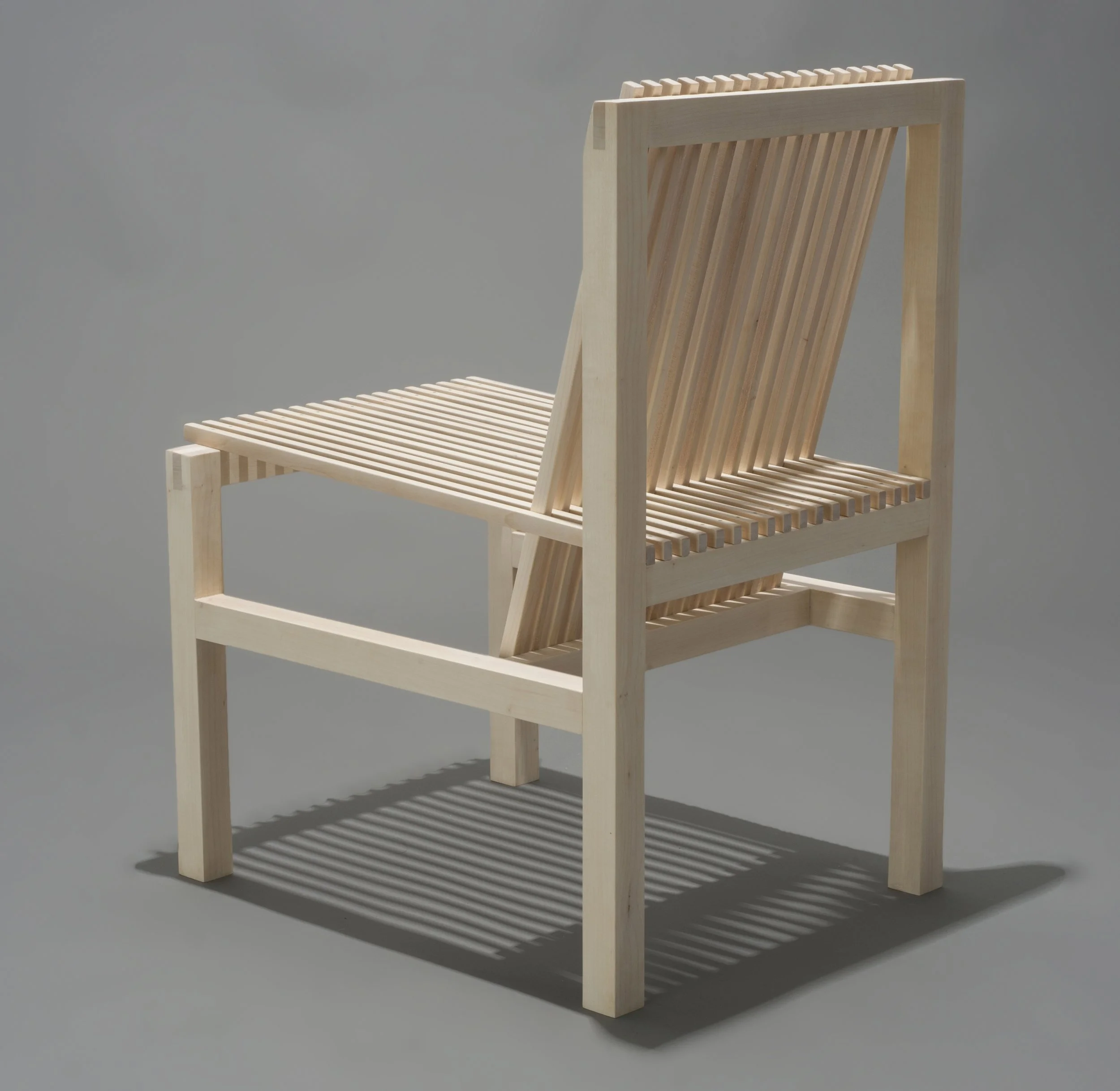
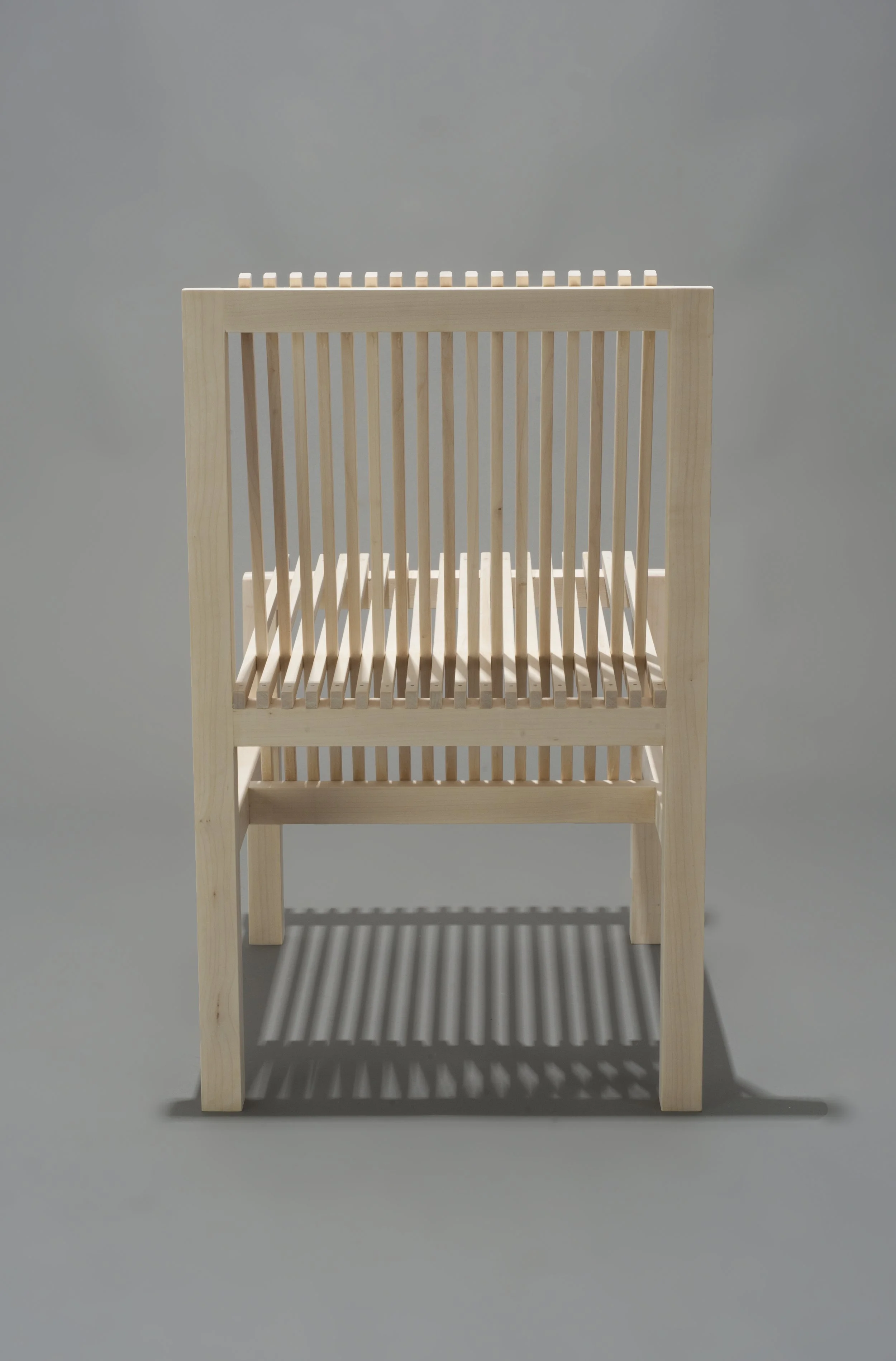
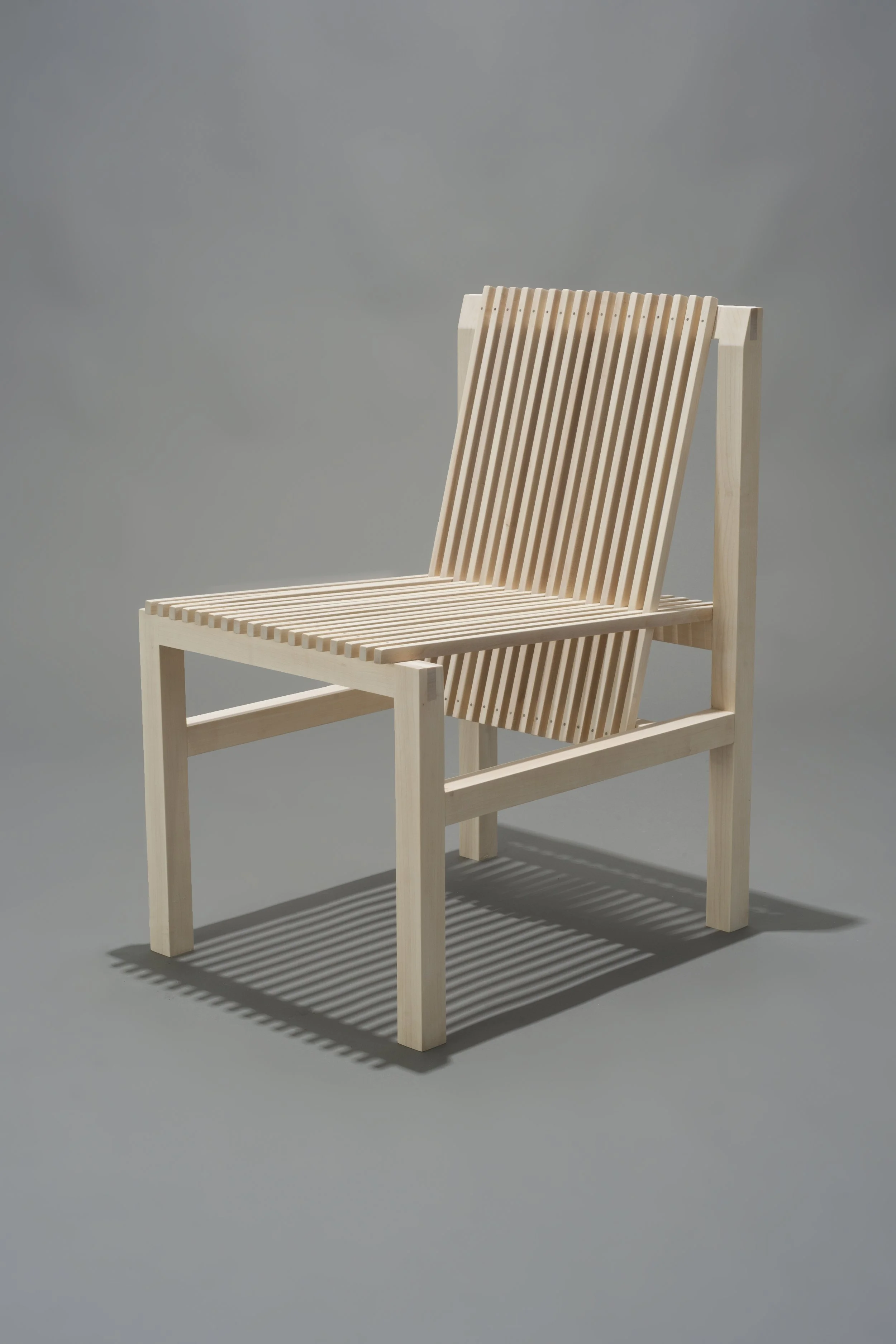
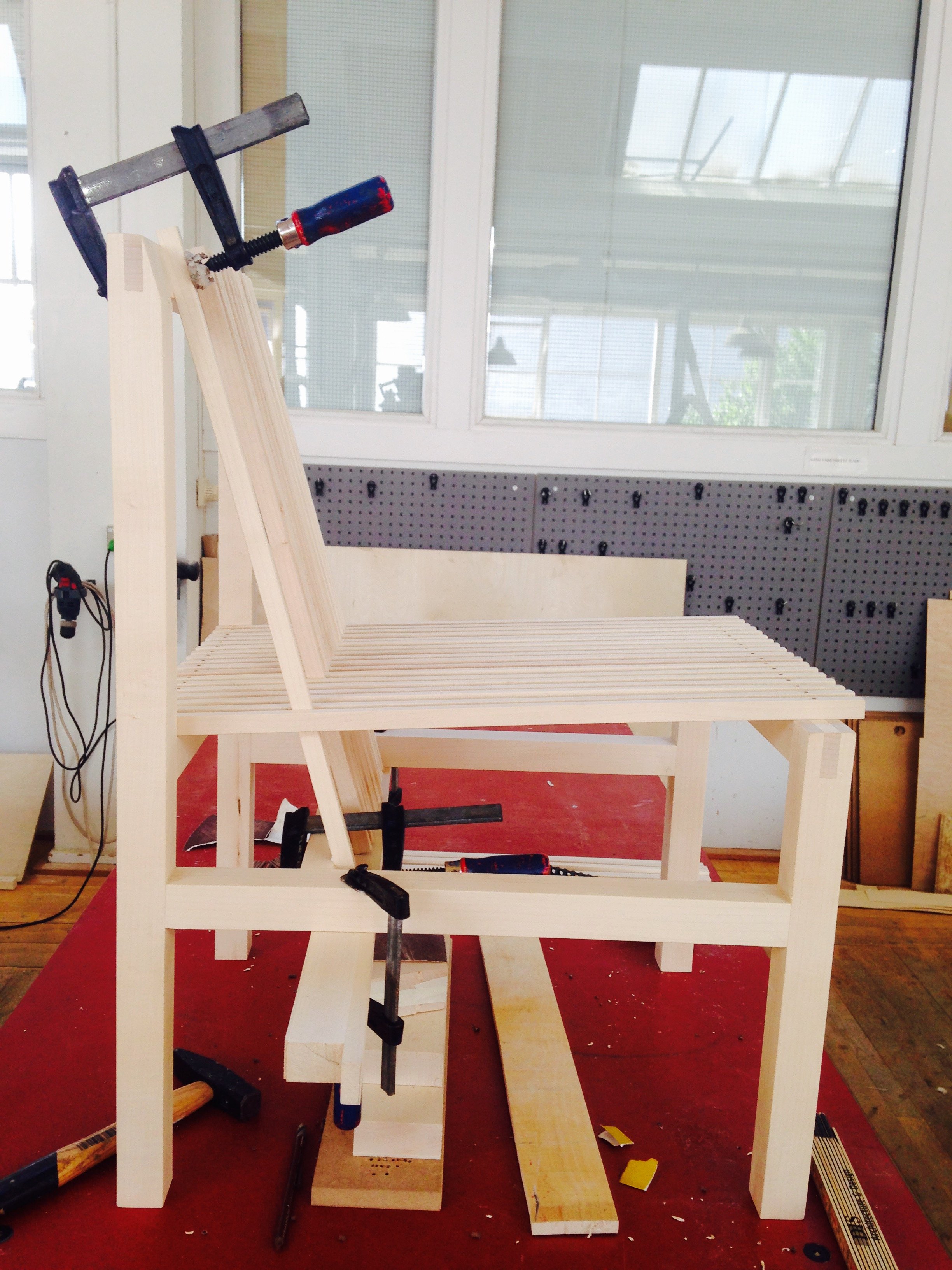
I designed and built this chair while attending a furniture design study abroad program in Copenhagen, Denmark. The final design honors traditional Scandinavian details, while the structural elements—where the back of the chair extends below the seat—surprisingly, draw inspiration from traditional Egyptian furniture.
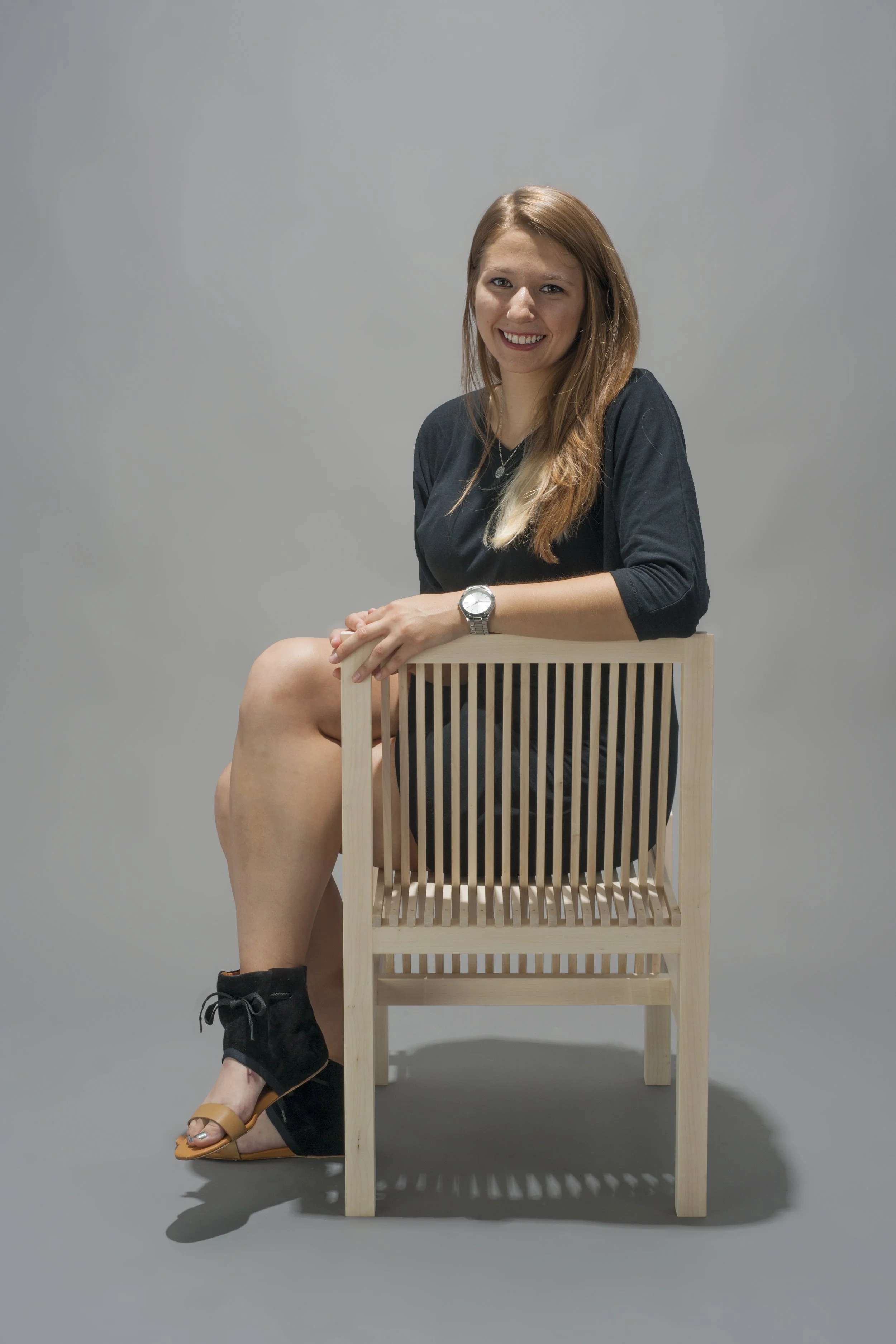
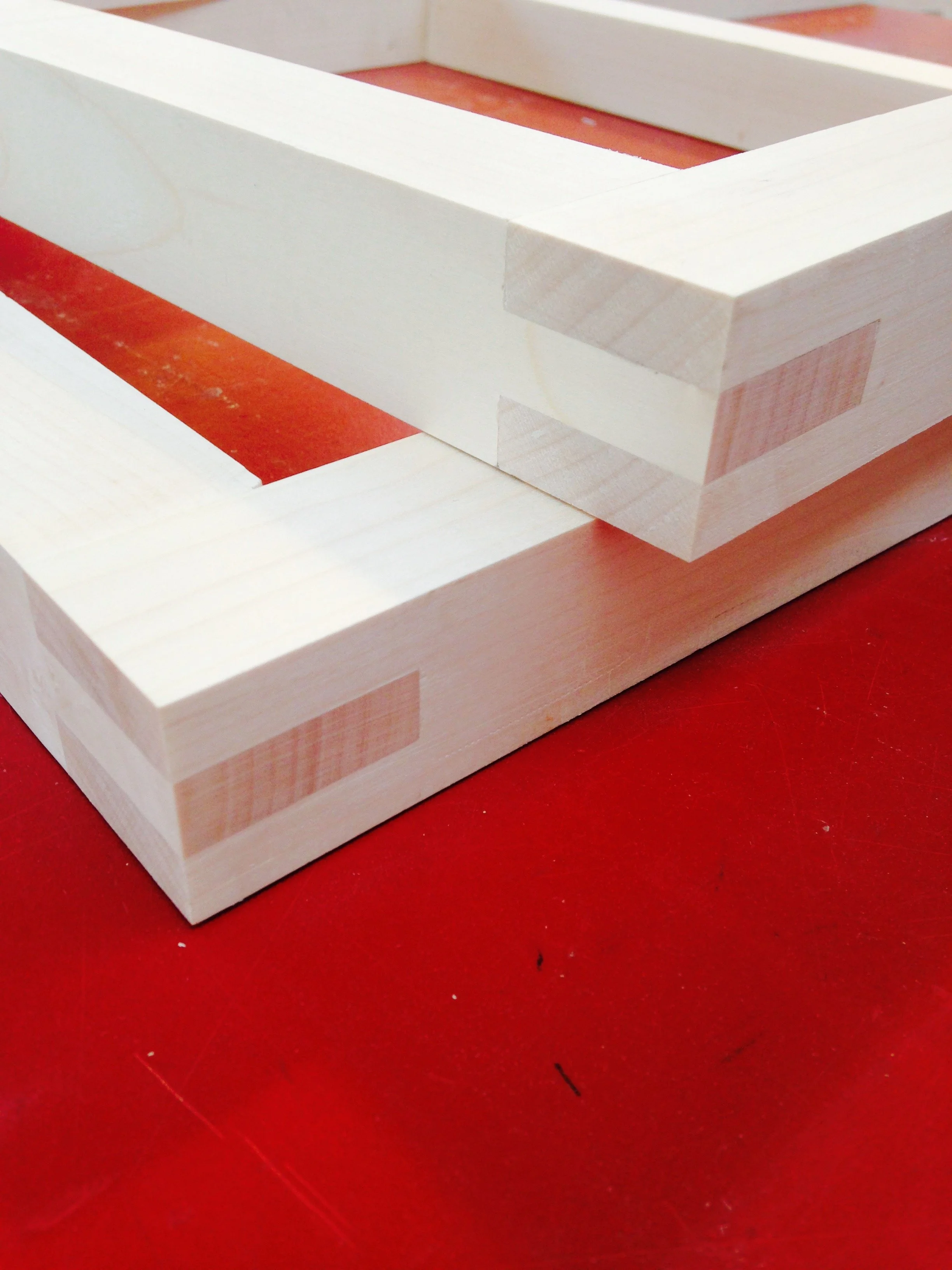
The chair’s structure is enhanced by a series of separate “piano keys” that work together to evenly distribute the user’s weight, making it more robust than a typical chair seat. Constructed from maple hardwood with contrasting walnut joinery, the piece reflects my personal design style, as I enjoy experimenting with contrast in my work. I finished the chair with a hand-applied soap-sand treatment for a smooth, natural surface.
The completed chair was exhibited in both Copenhagen, Denmark, and Rochester, New York. It remains one of my favorite pieces I’ve designed, and while conceptualizing the design was the most challenging part, the rest of the process progressed smoothly. The “Piano Chair” still stands strong over 10 years later!
STUDY TOUR
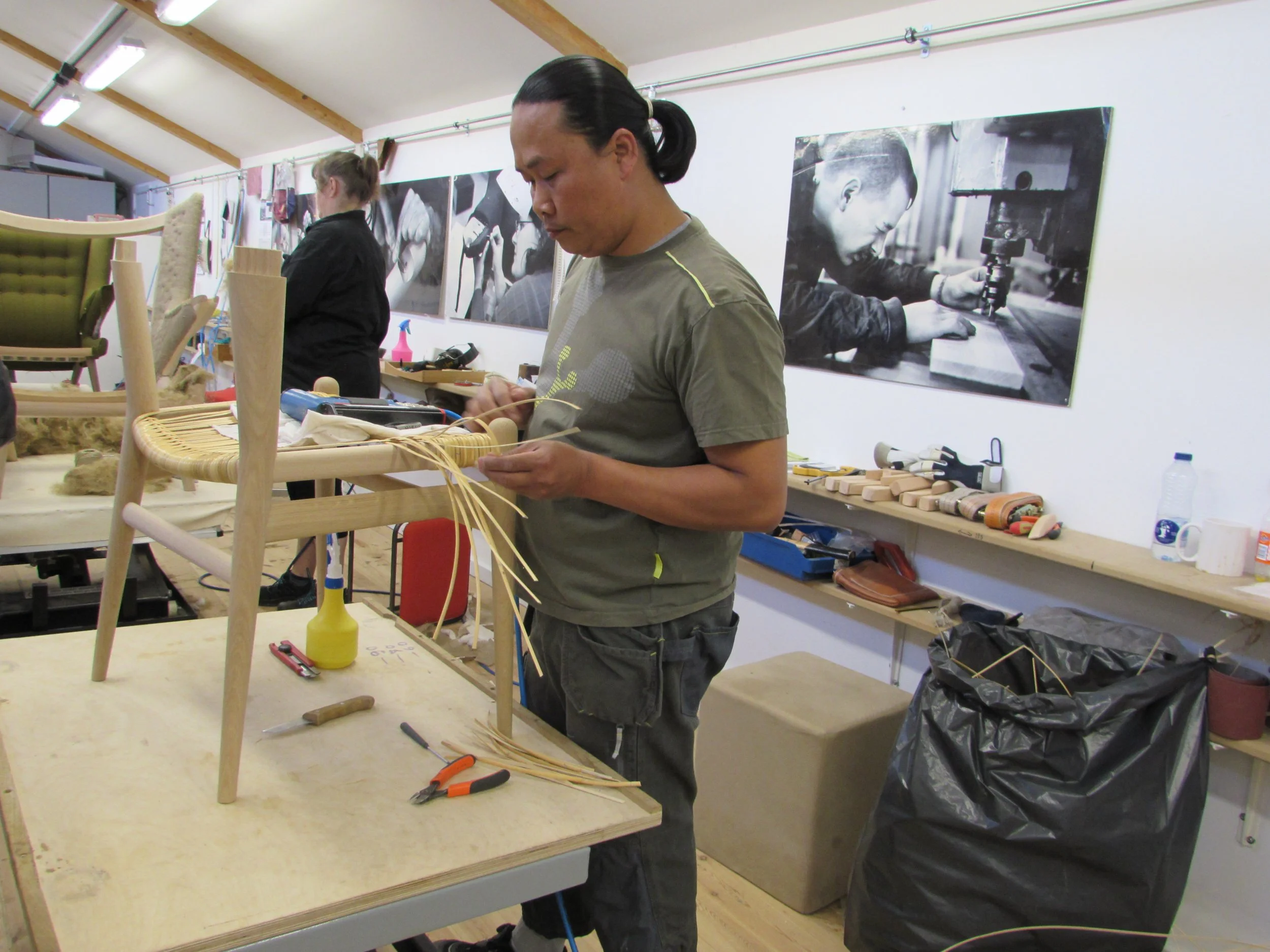
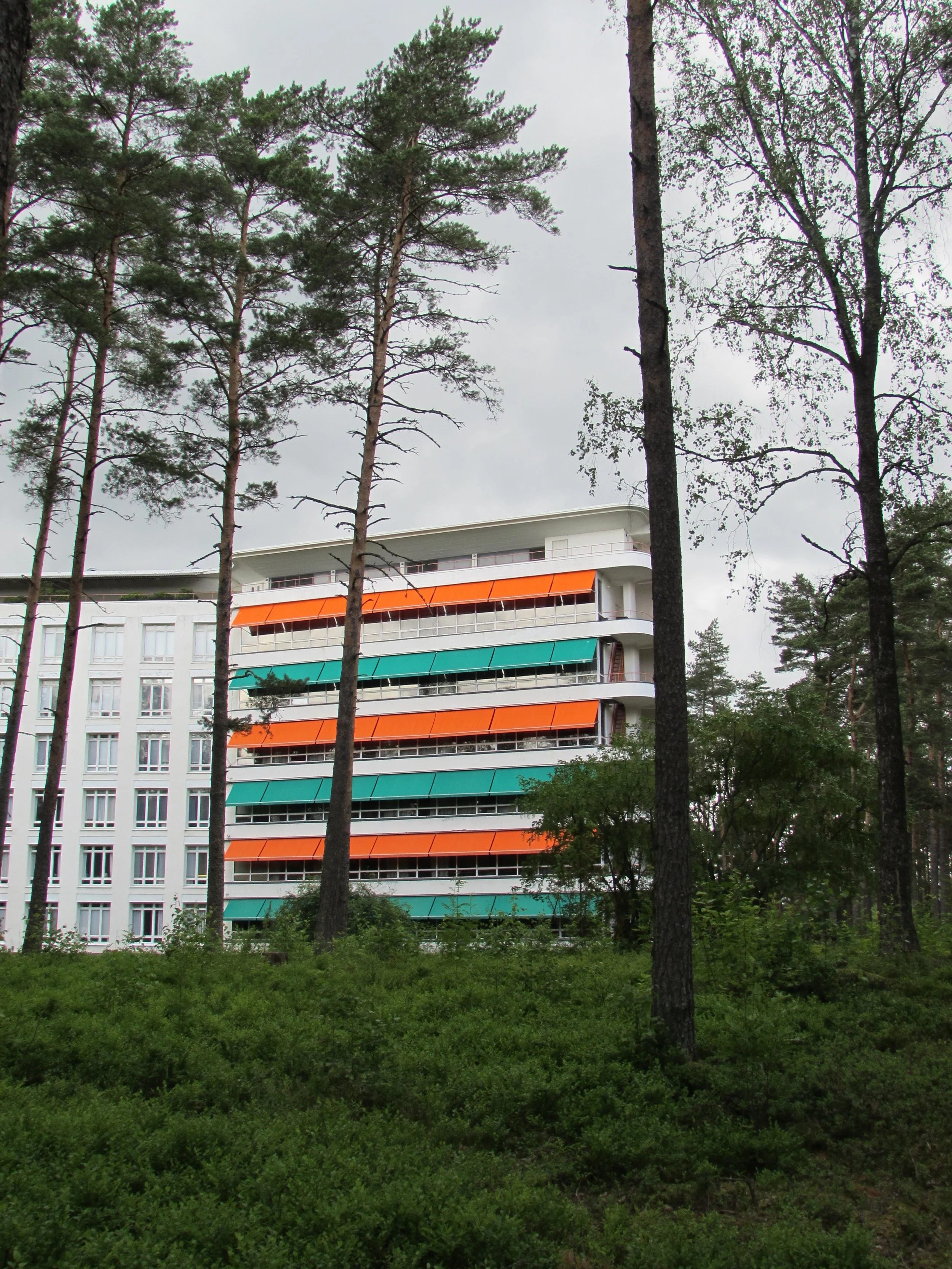
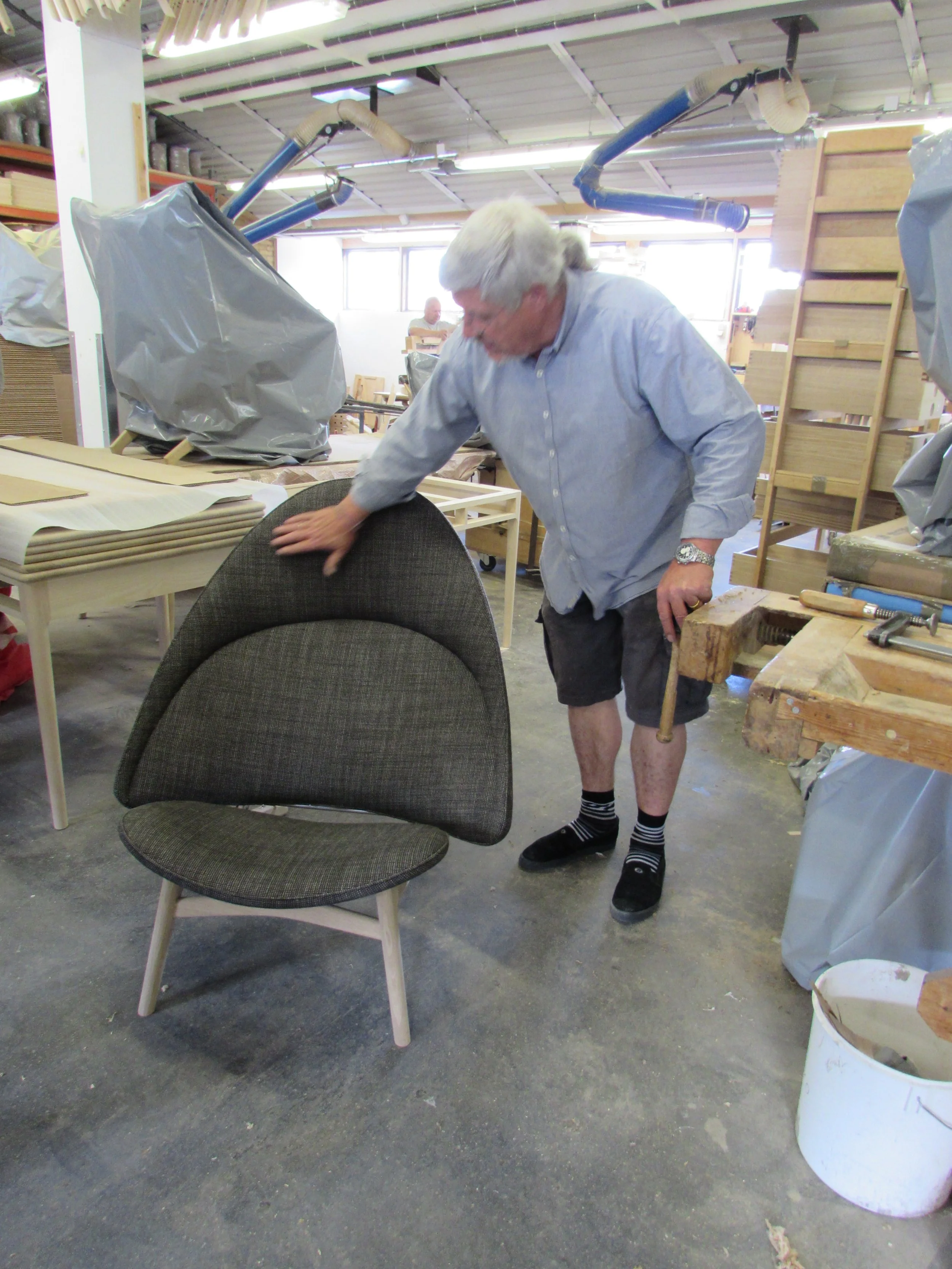
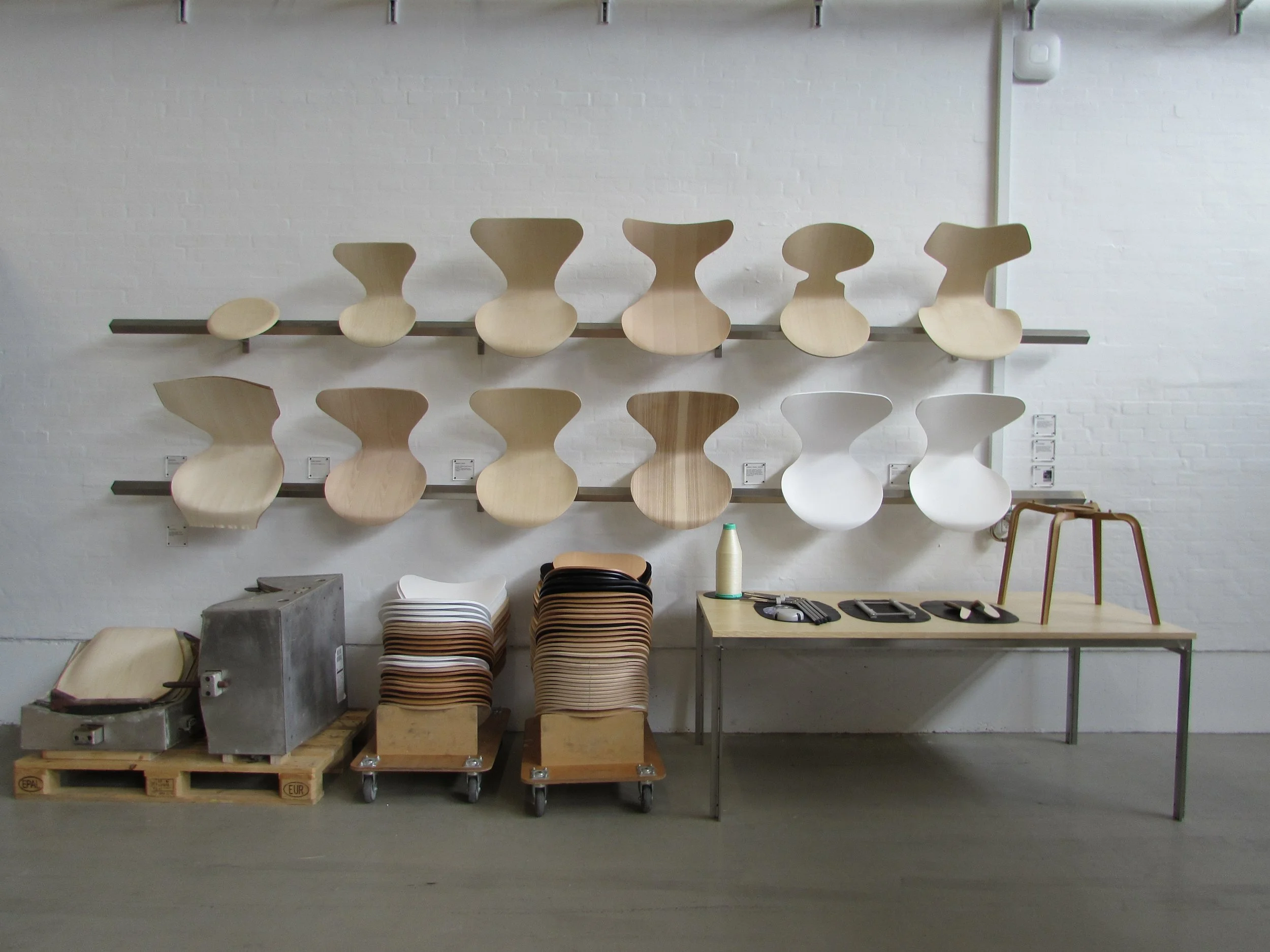
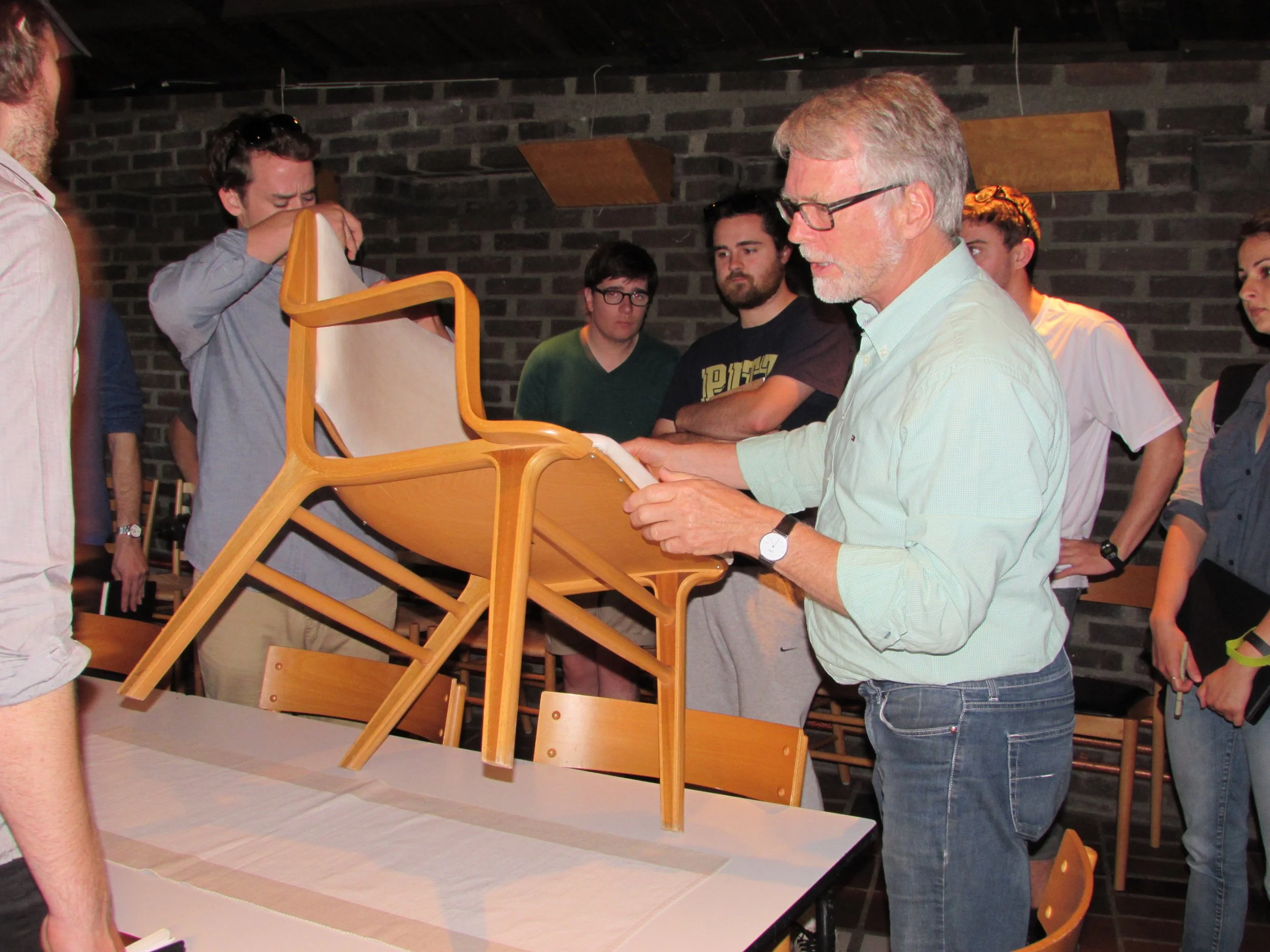
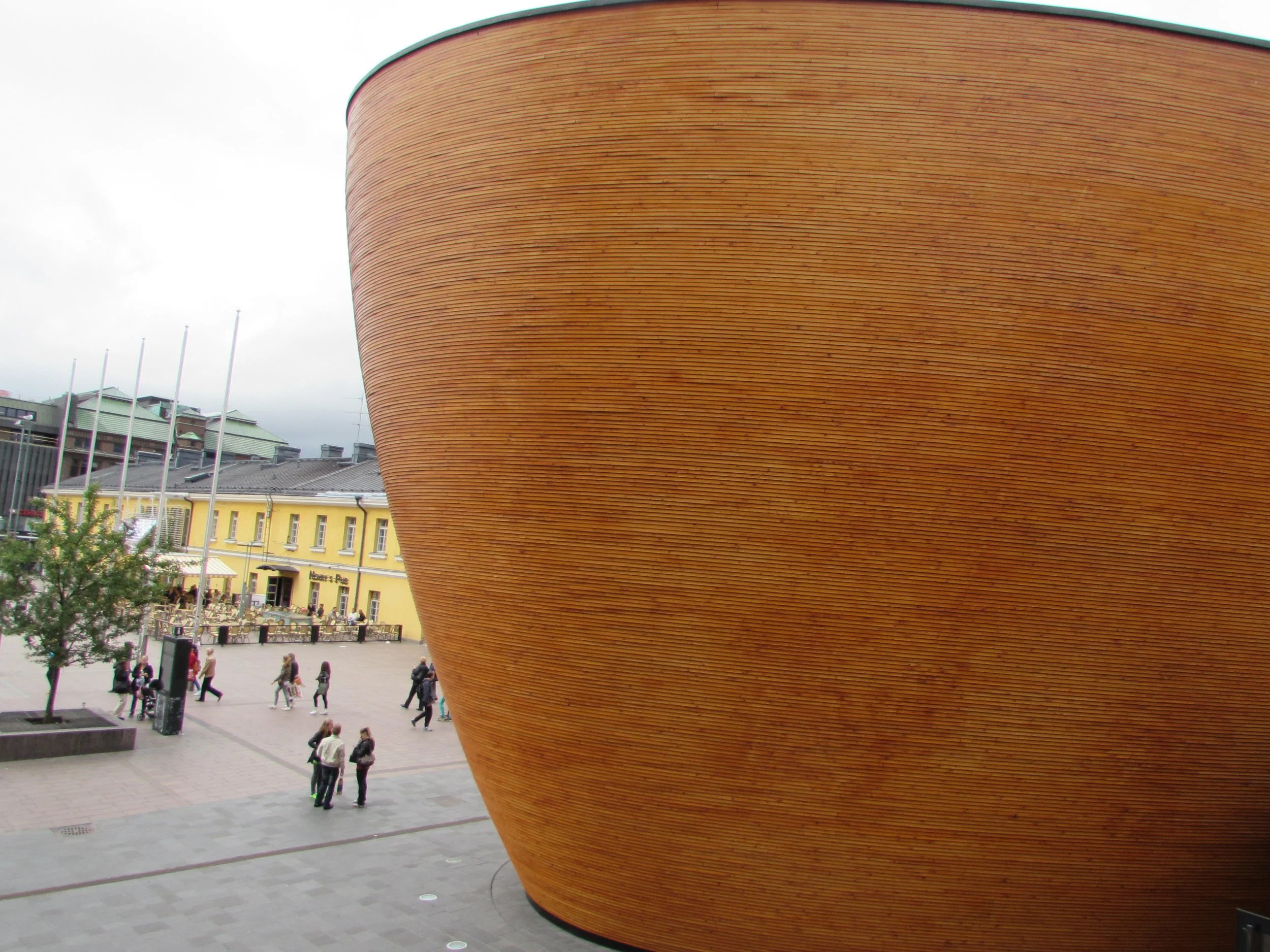
I participated in seminars with professionals and educators, design museums, manufacturer sites and galleries spread out across Copenhagen, Denmark, Helsinki, Finland and Stockholm, Sweden. I was overwhelmed by inspiration following this study tour and initially felt pulled in many different directions!
INITIAL MOCK-UPS & 3D SKETCHING
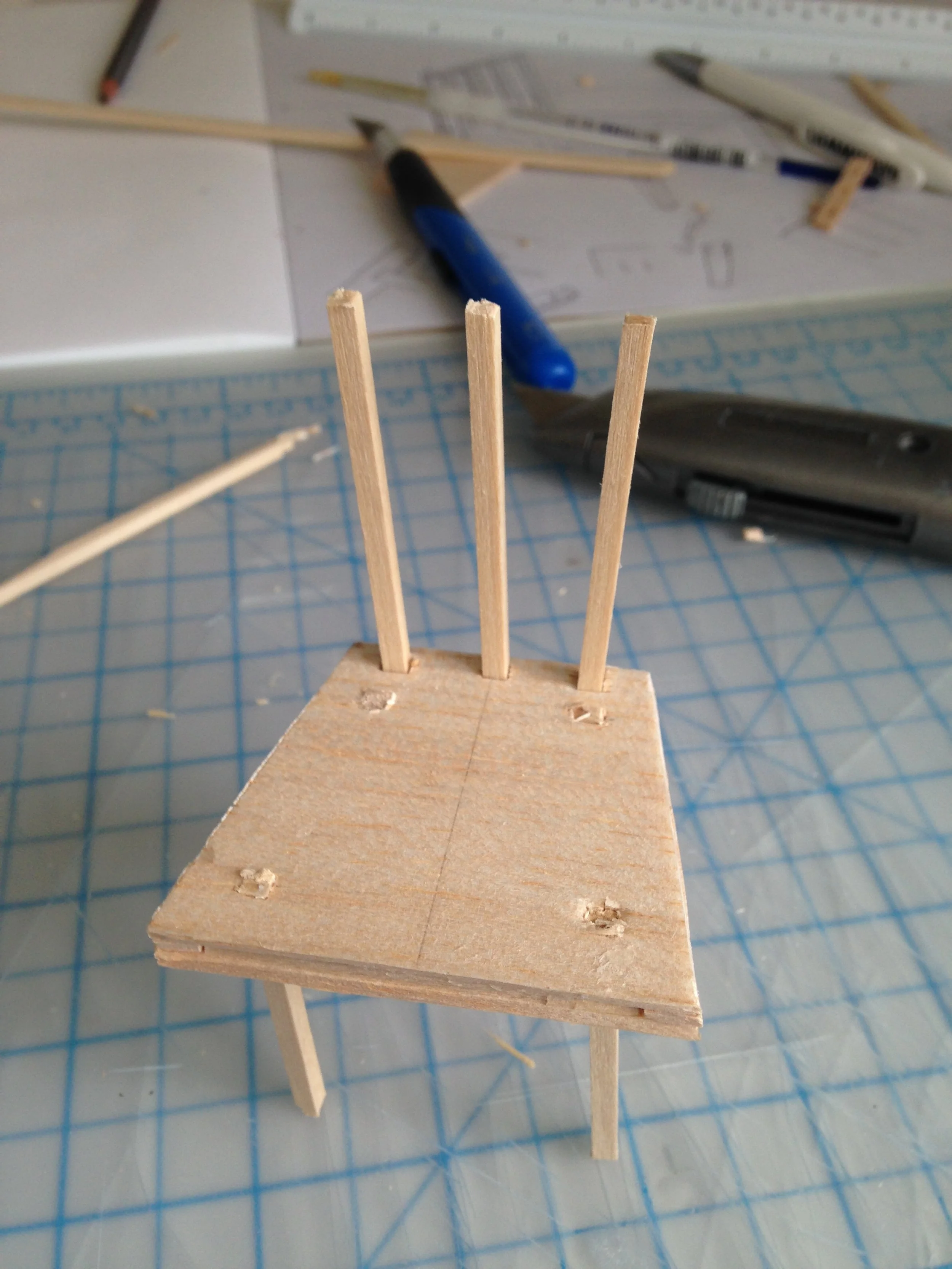
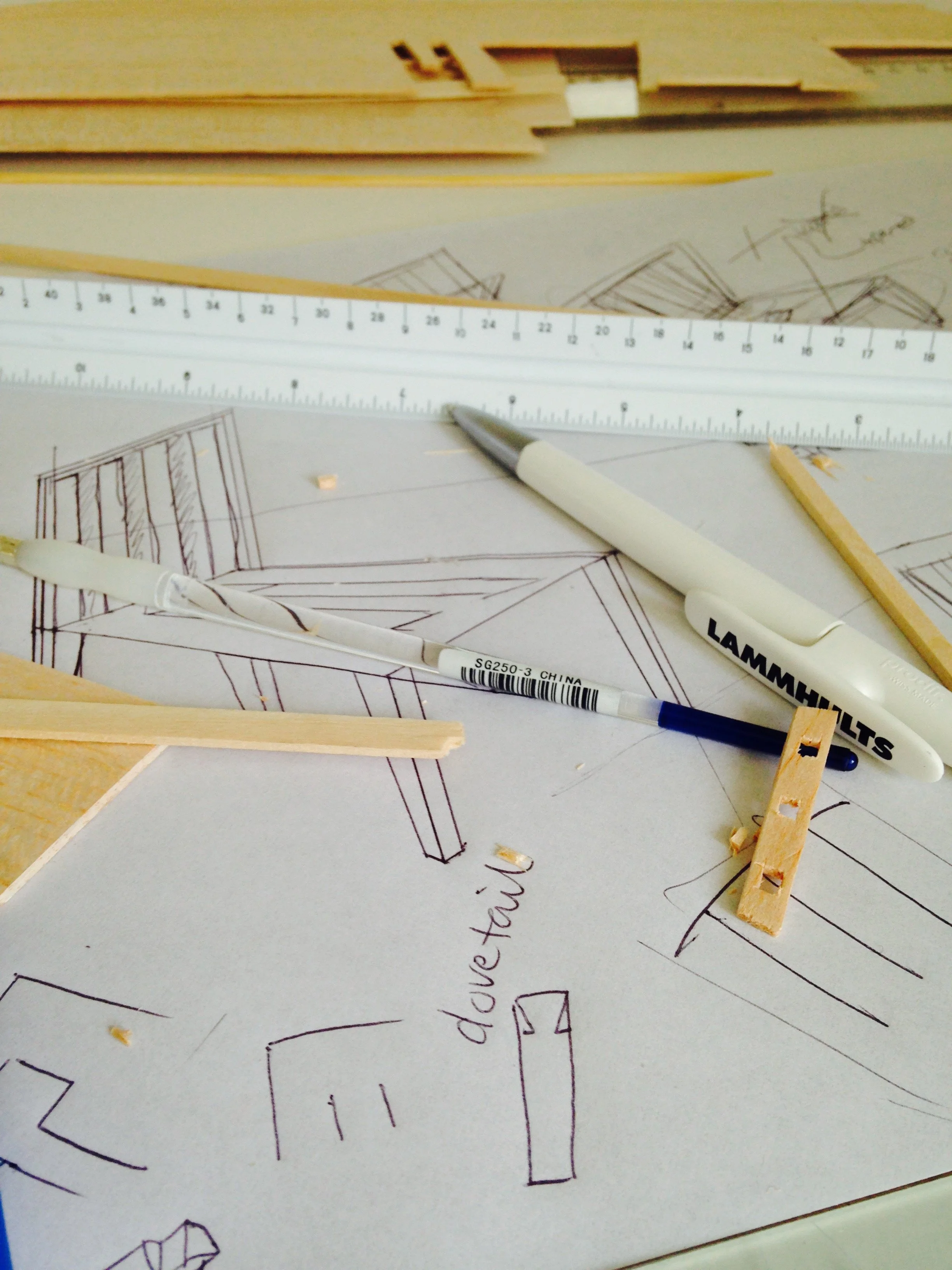
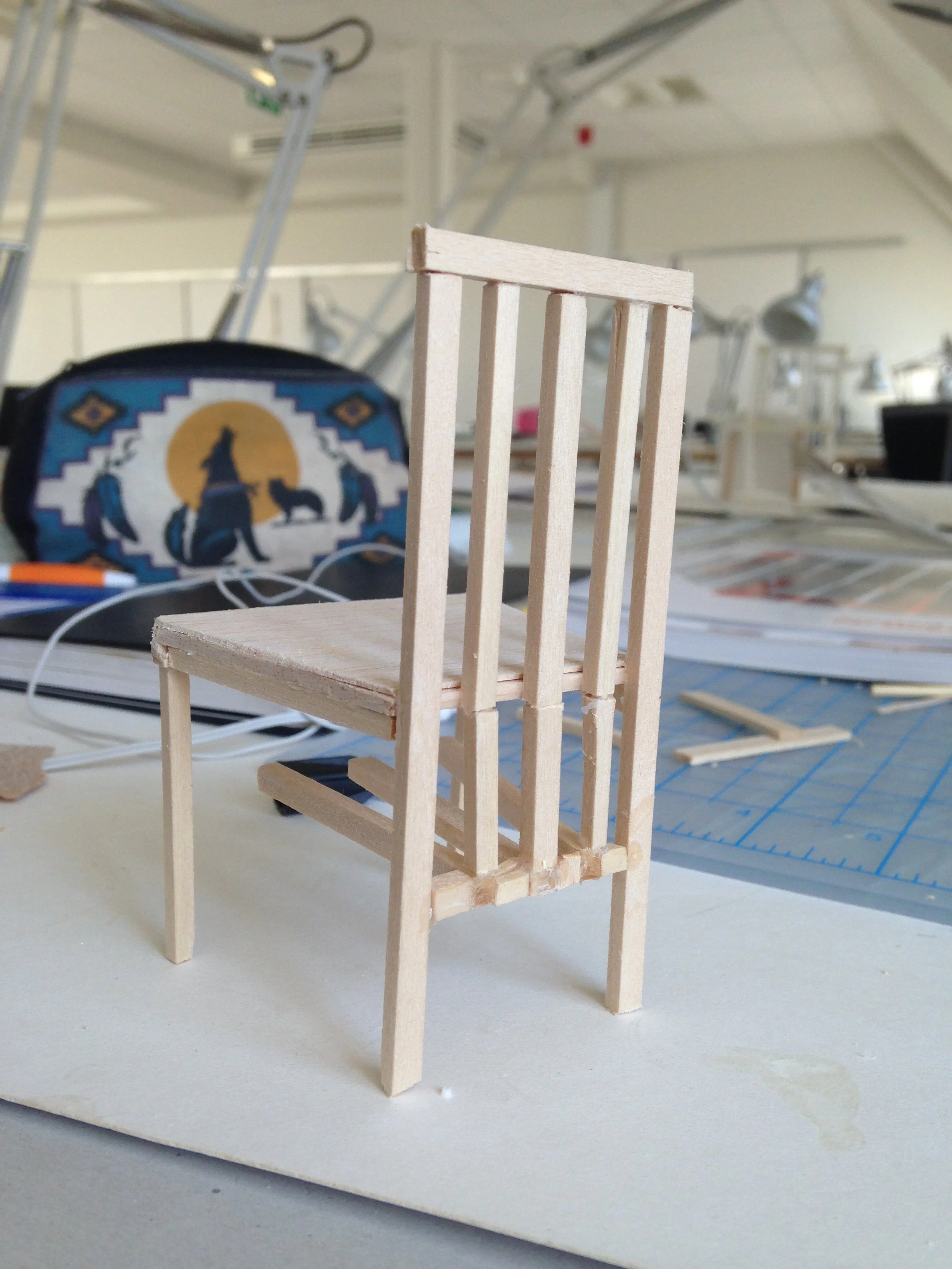
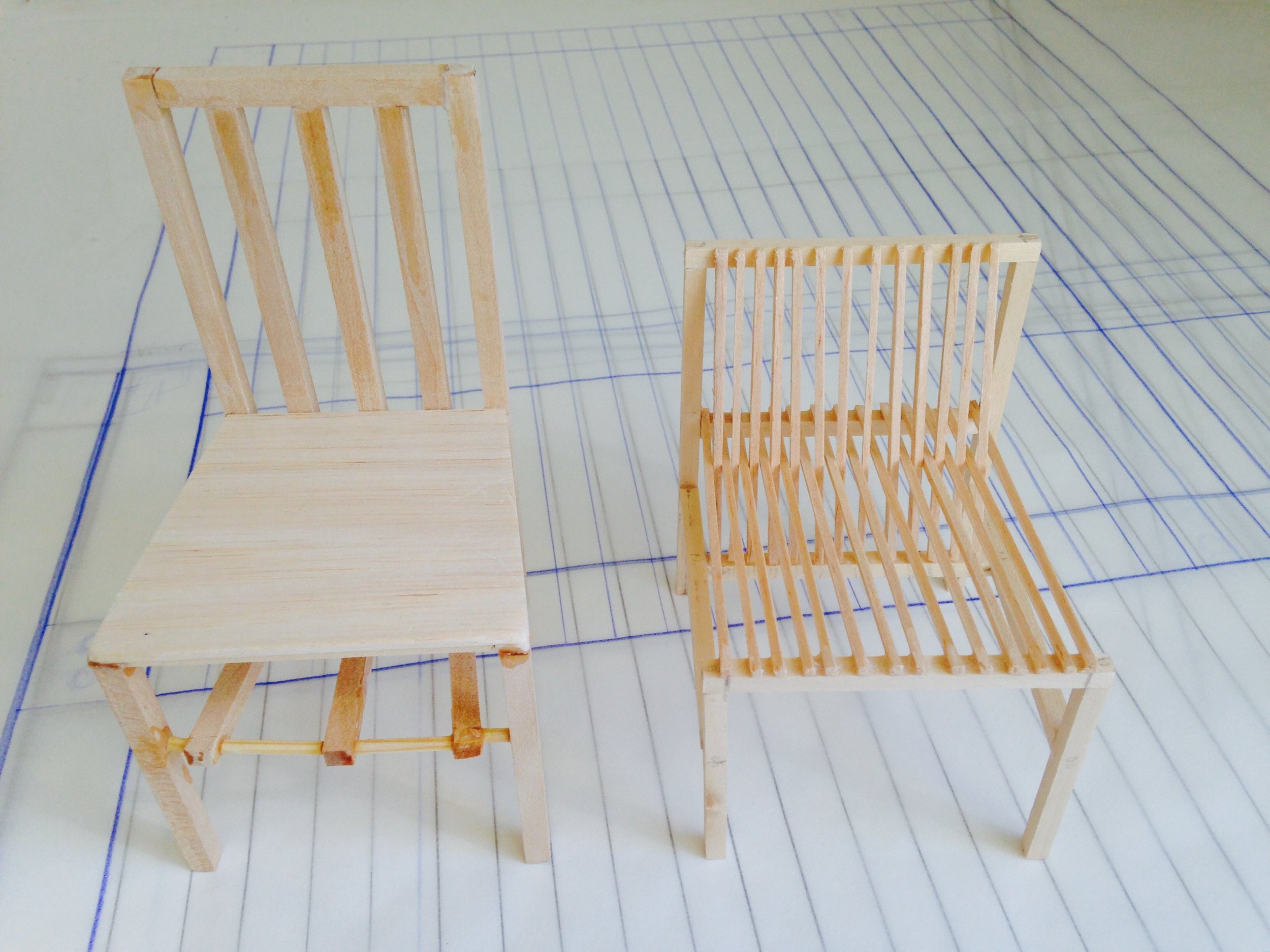
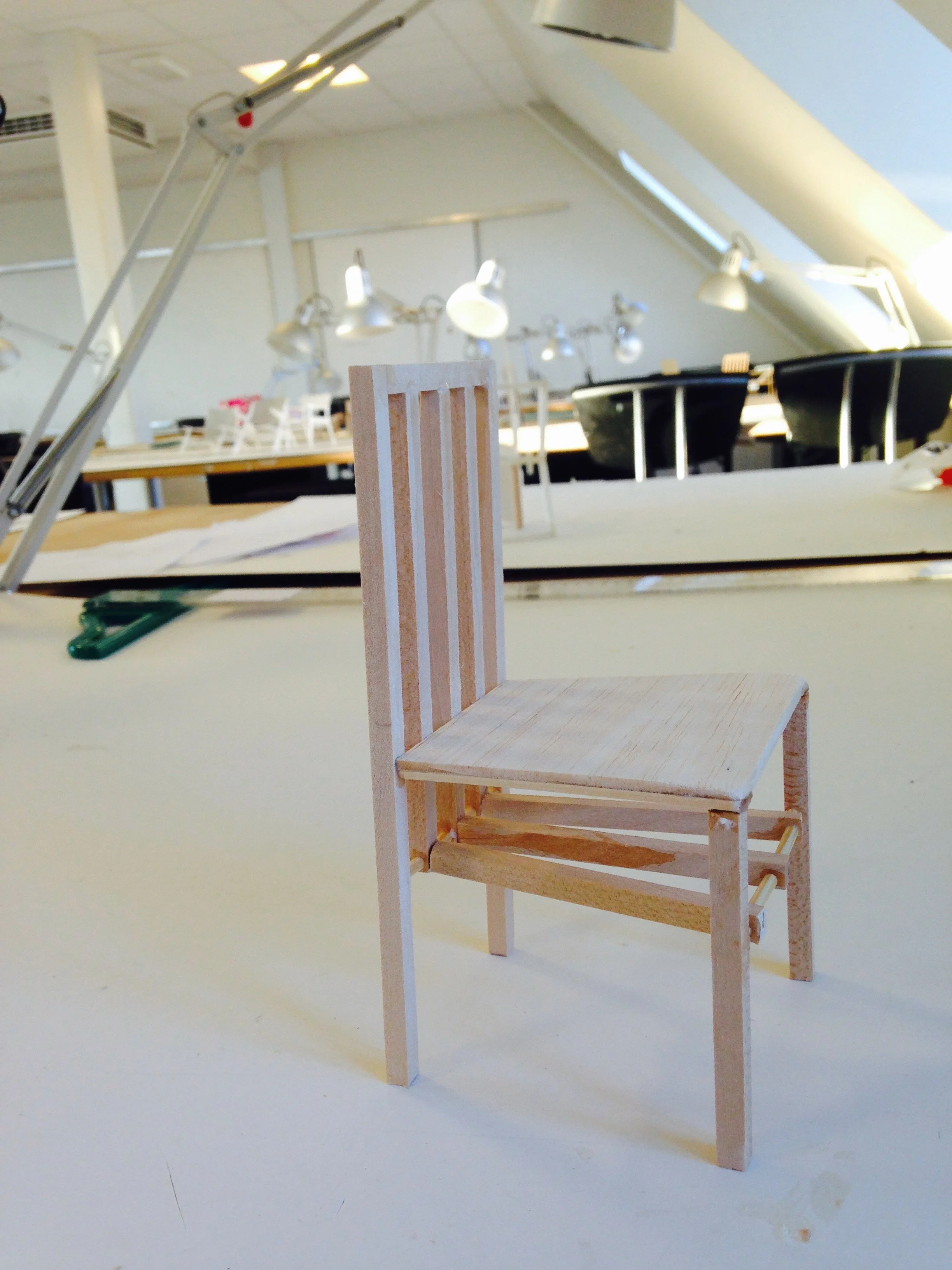
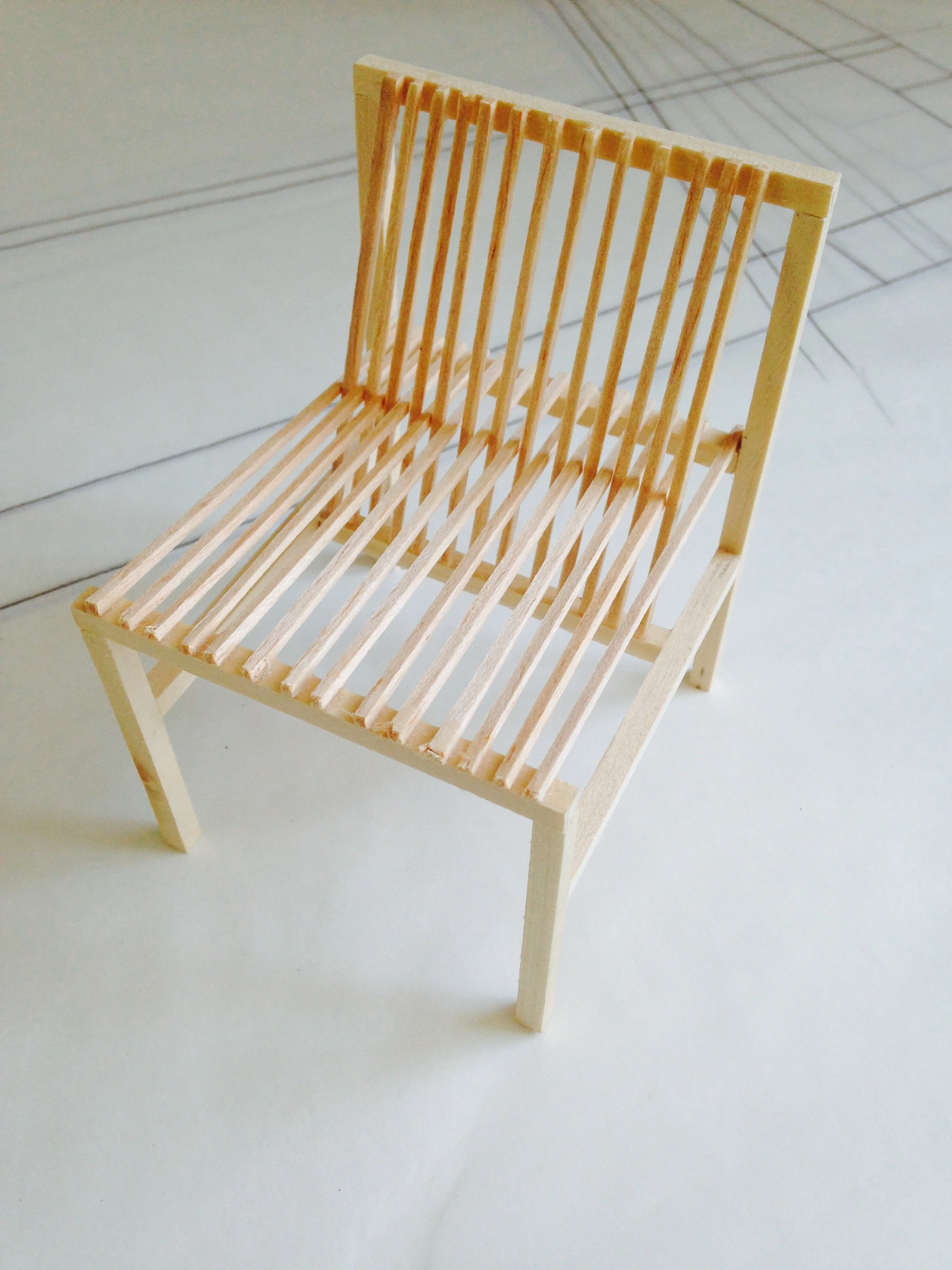
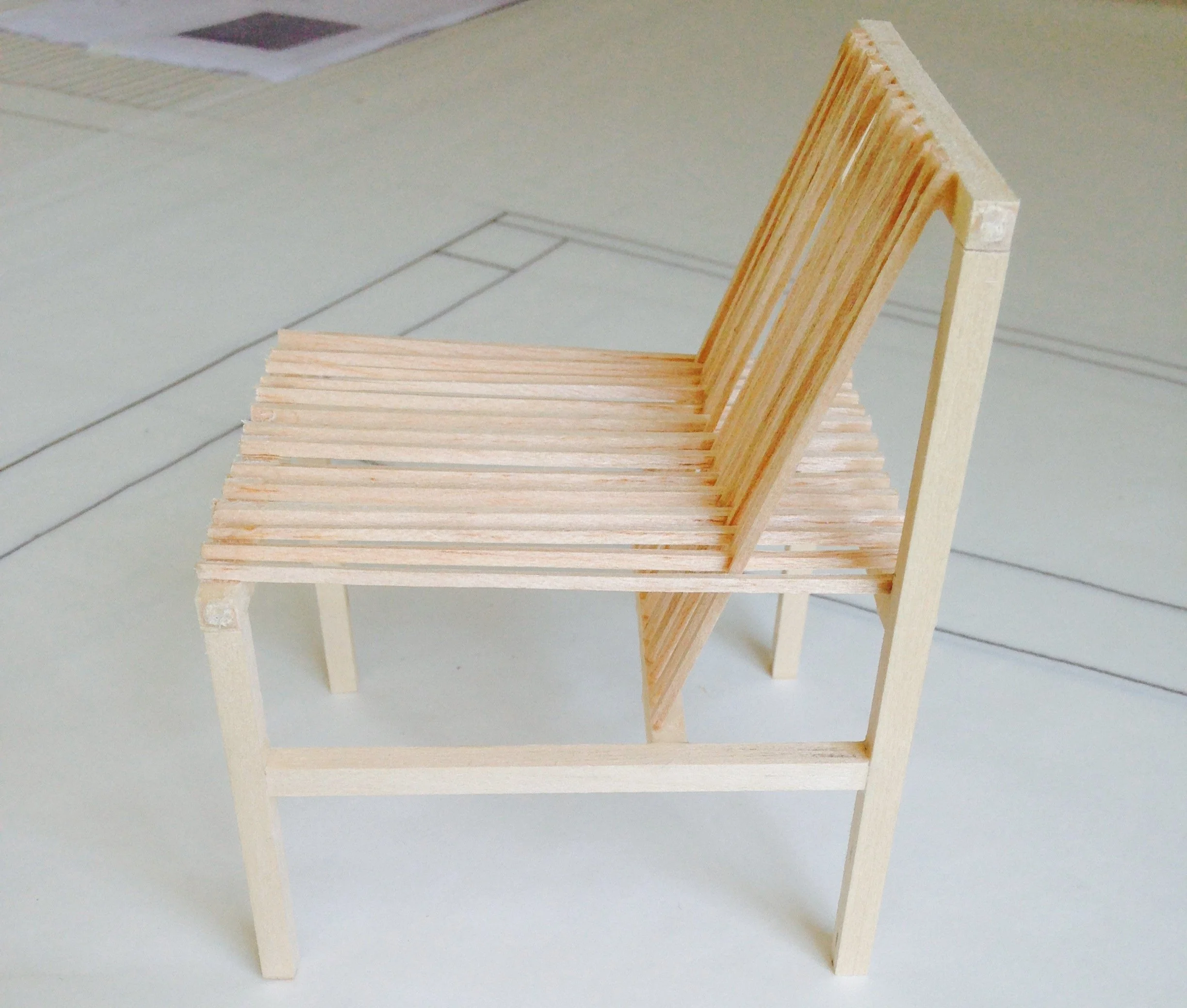
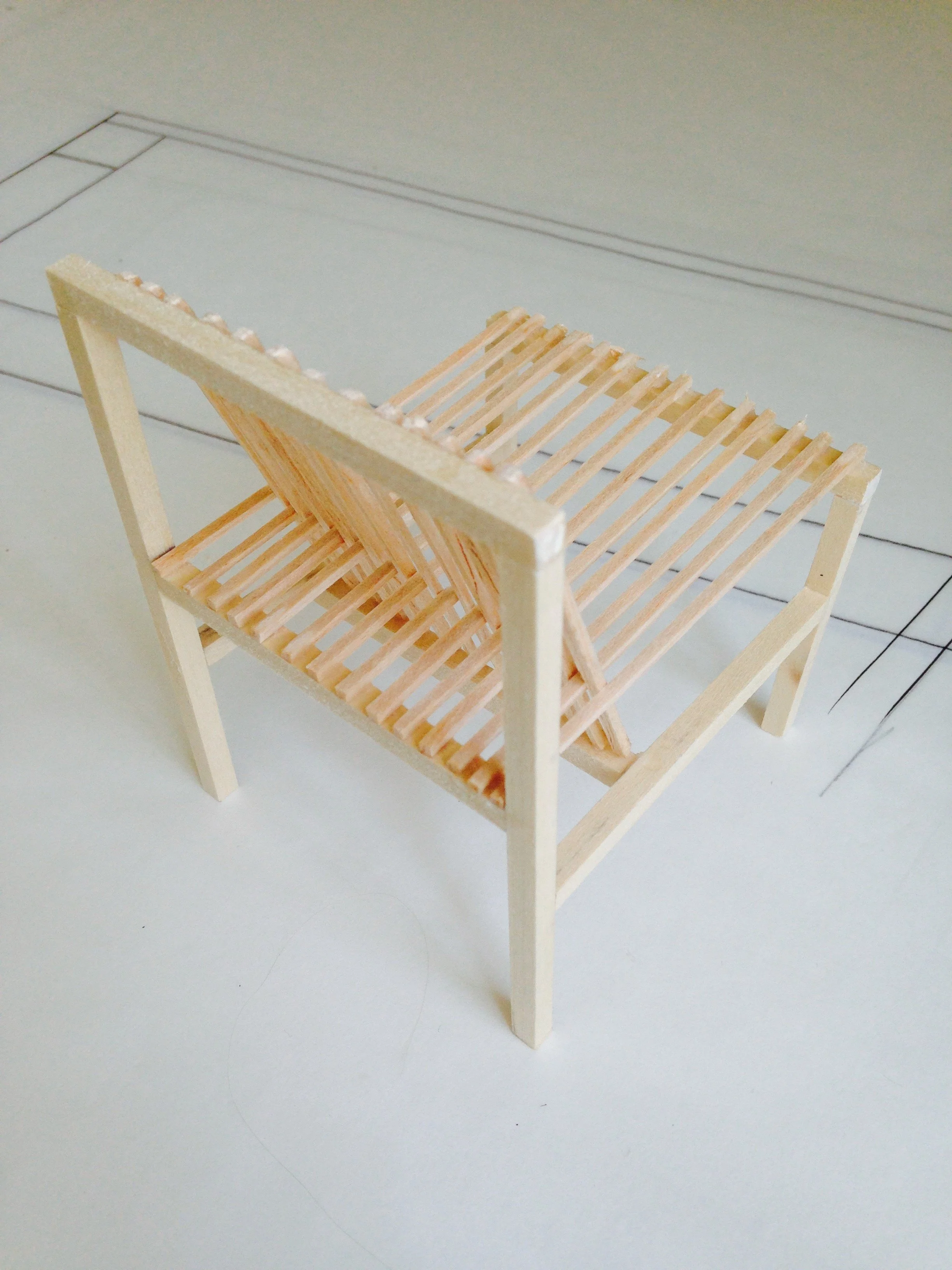
Like my previous work, this design began with a single functional goal - which this time was to create a chair with a shelf beneath the seat. This was a pivotal stage in development, as I quickly realized that a backrest set at a 90-degree angle made the chair quite uncomfortable. With guidance from experienced professors, I explored alternatives and ultimately adopted an Egyptian furniture-inspired structural solution. I also discovered that reducing the size of the seat panels not only created visual interest but also elevated the overall design.
FINAL FORM
Scandinavian details honoring visible joinery, clean lines and a strong skeletal structure inspired by traditional Egyptian furniture design allow this chair to comfortably remain at a 45 degree angle.
1:1 SCALE DRAWINGS
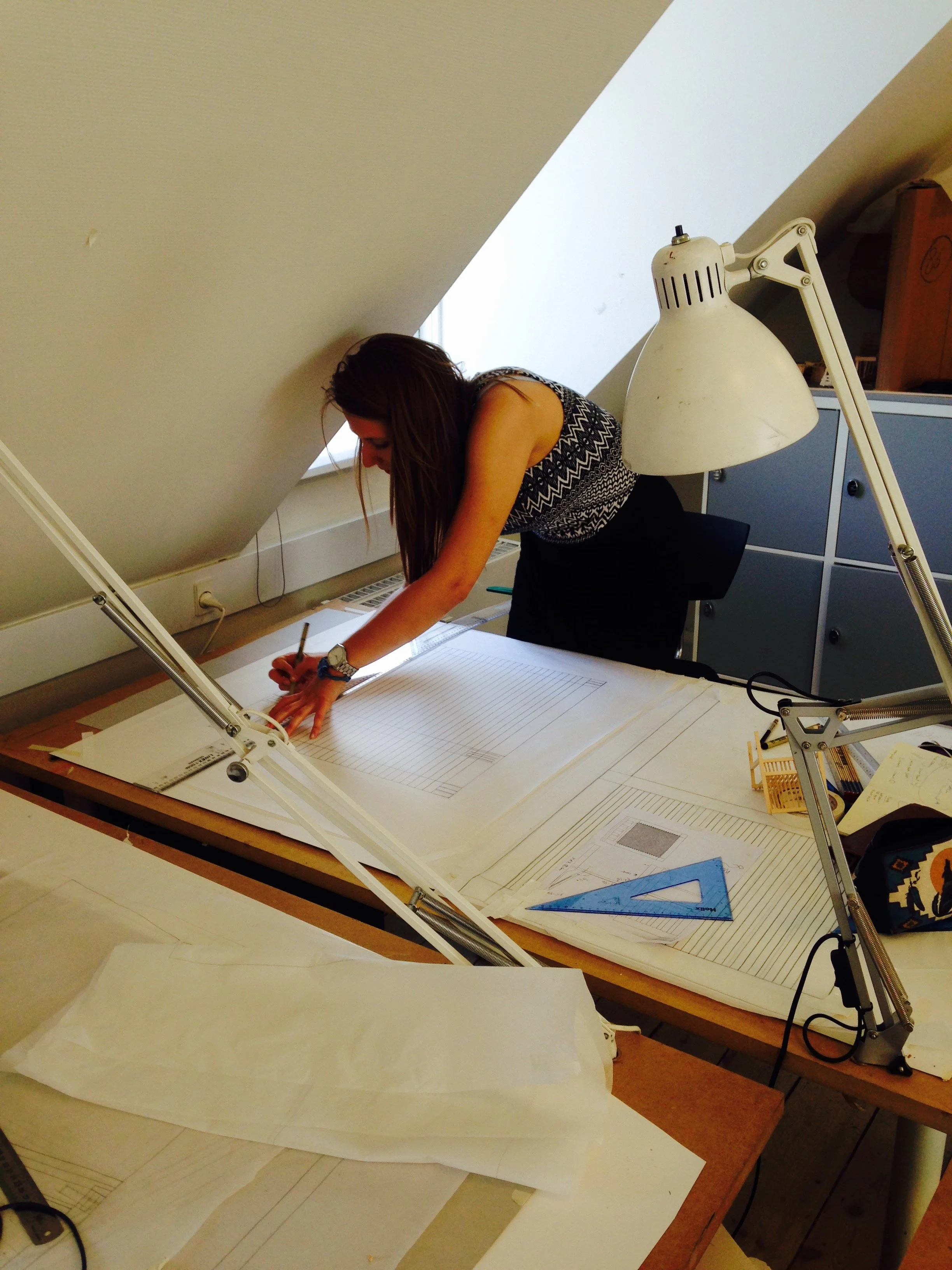
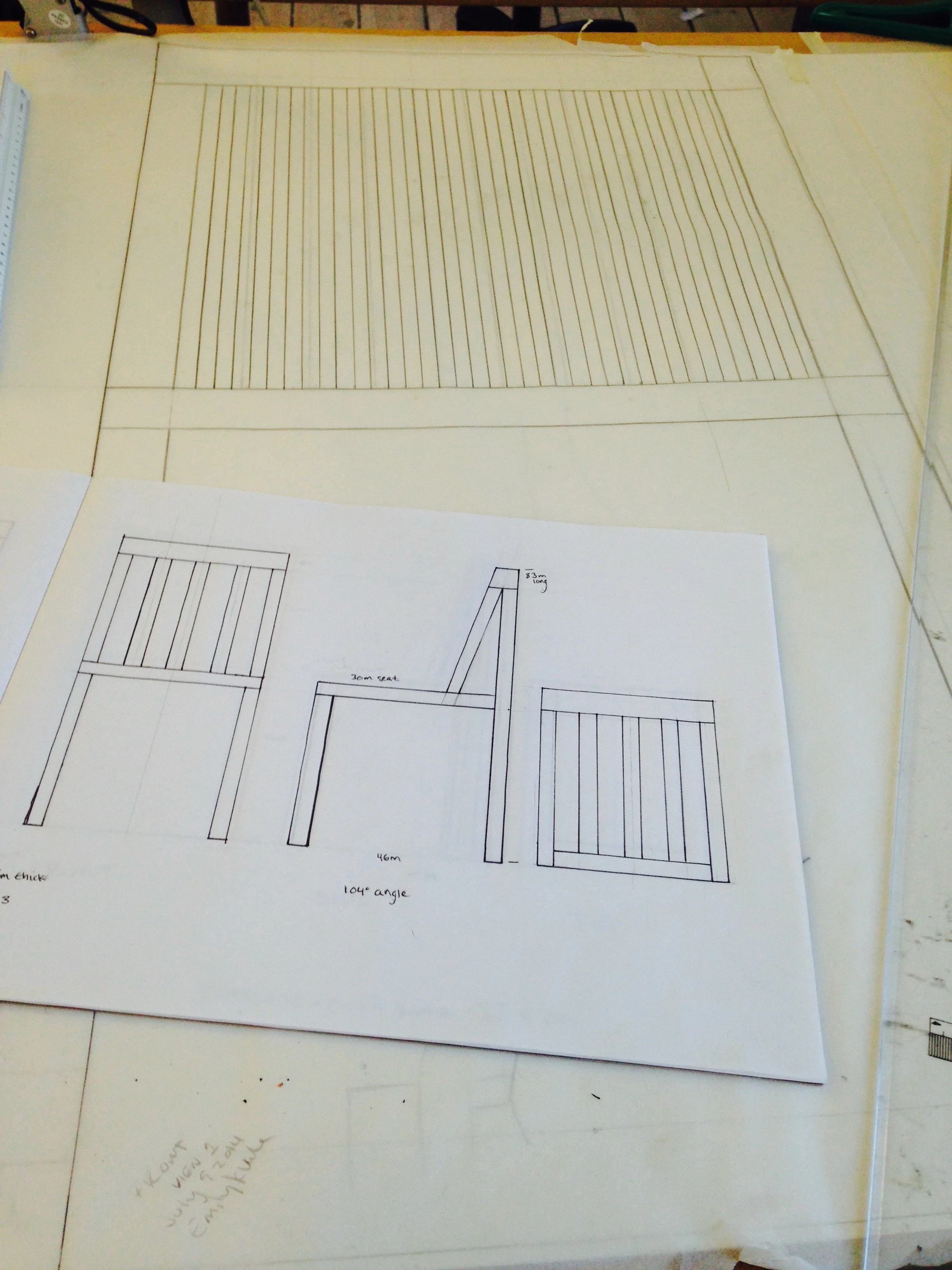
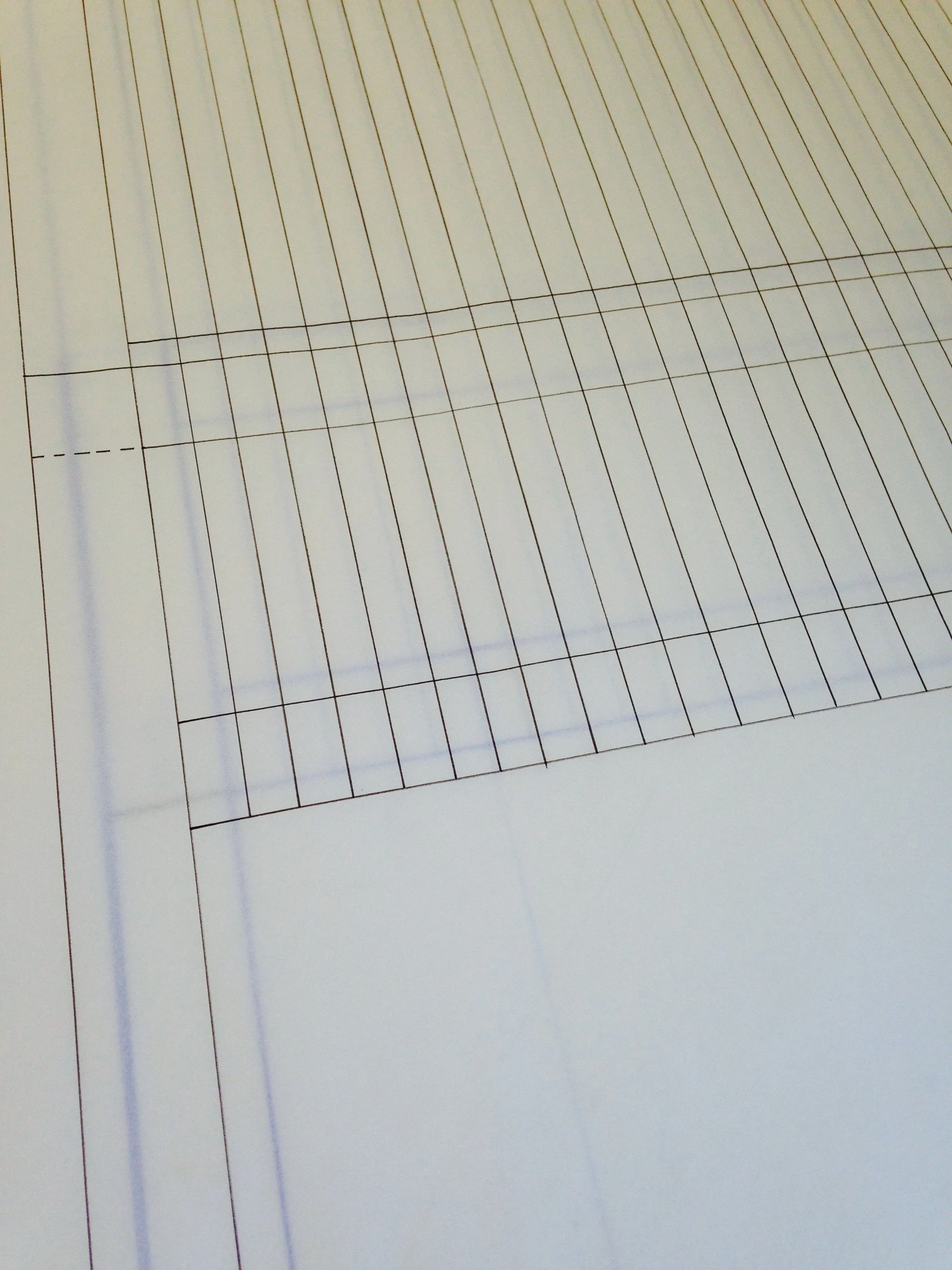
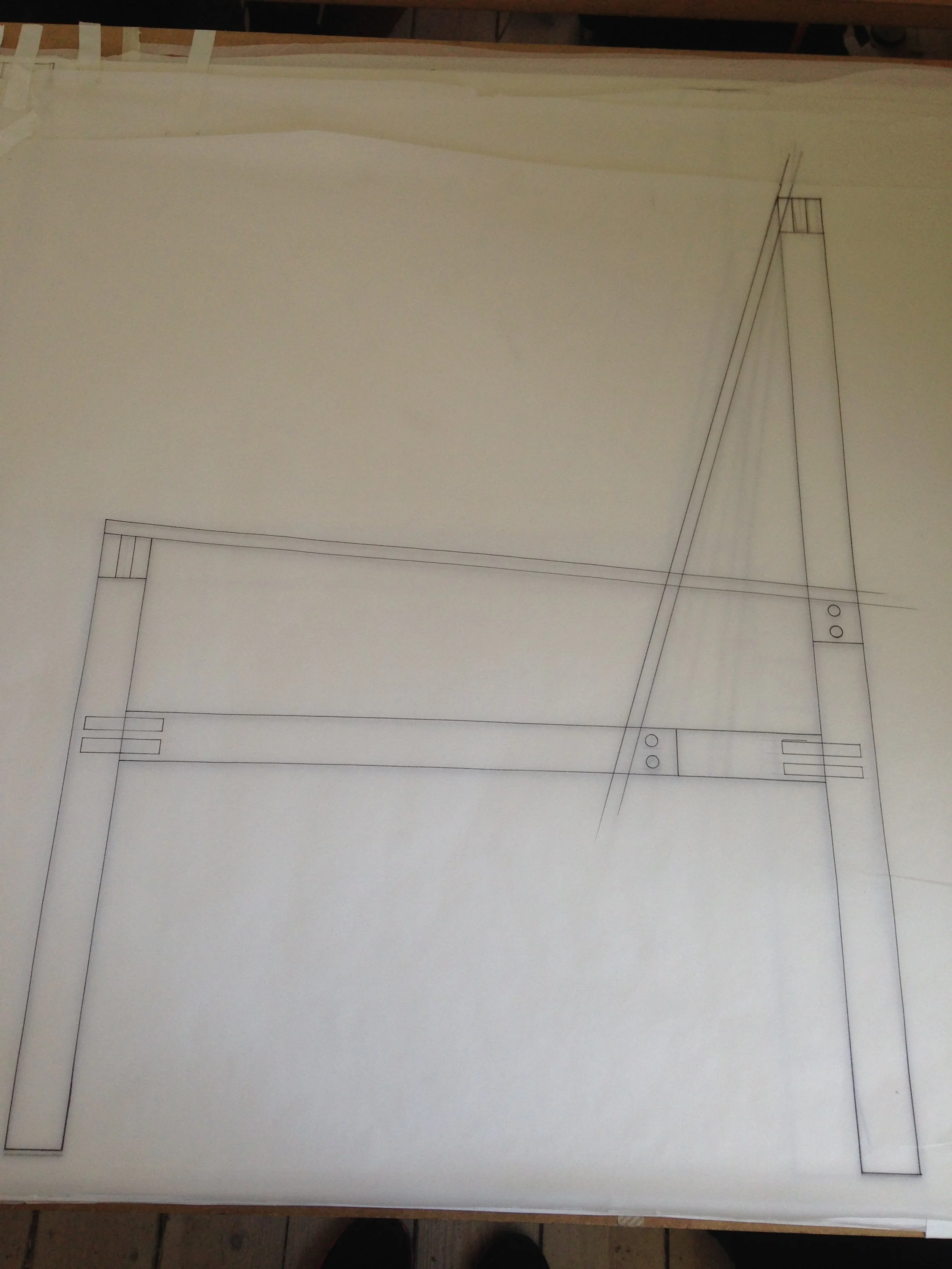
This was a crucial part of the process, as these drawings would be the blueprint to building my final piece. I had to work efficiently to make sure all measurements and joinery details were both correct and precise.
BUILD PROCESS
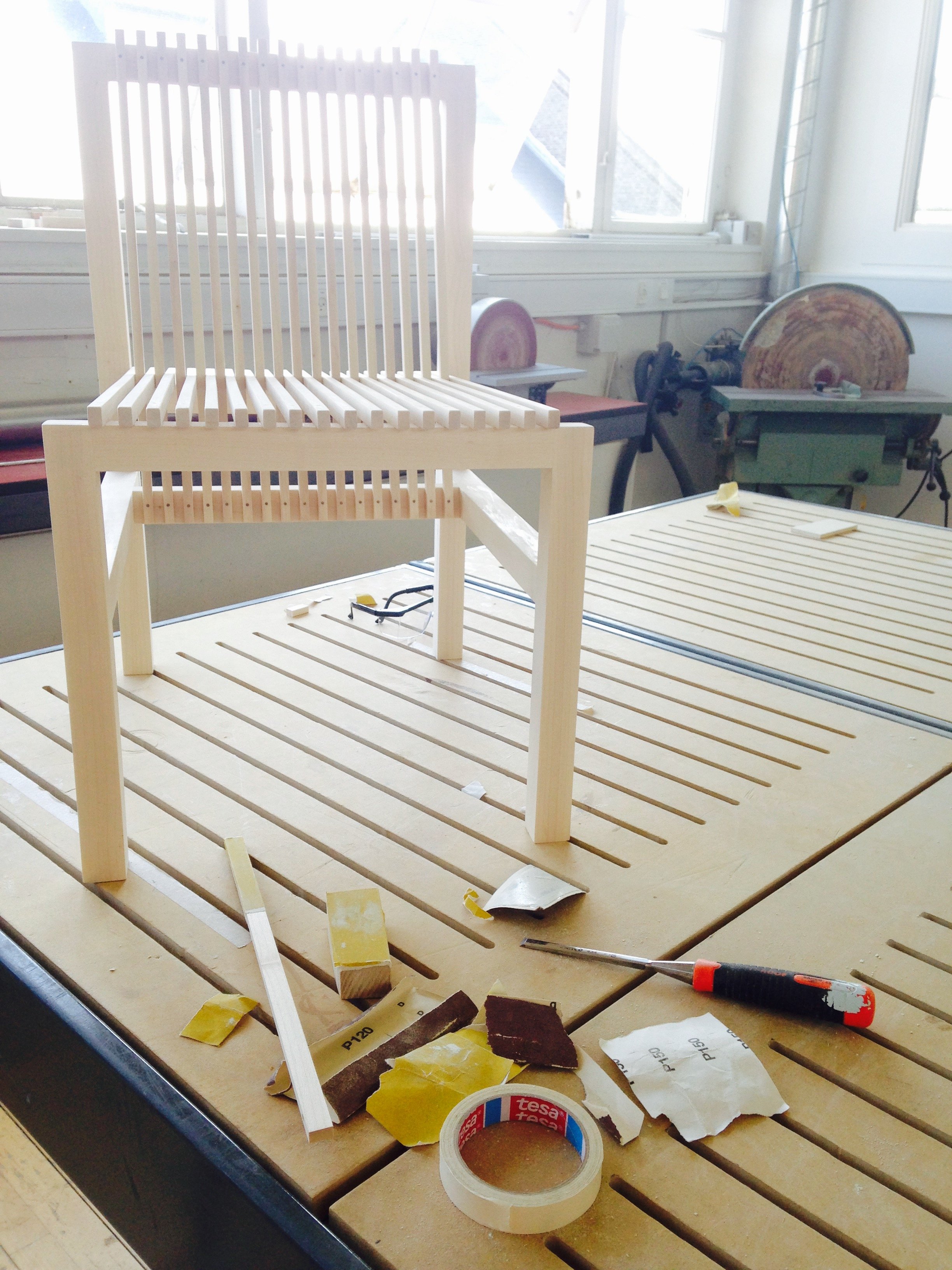
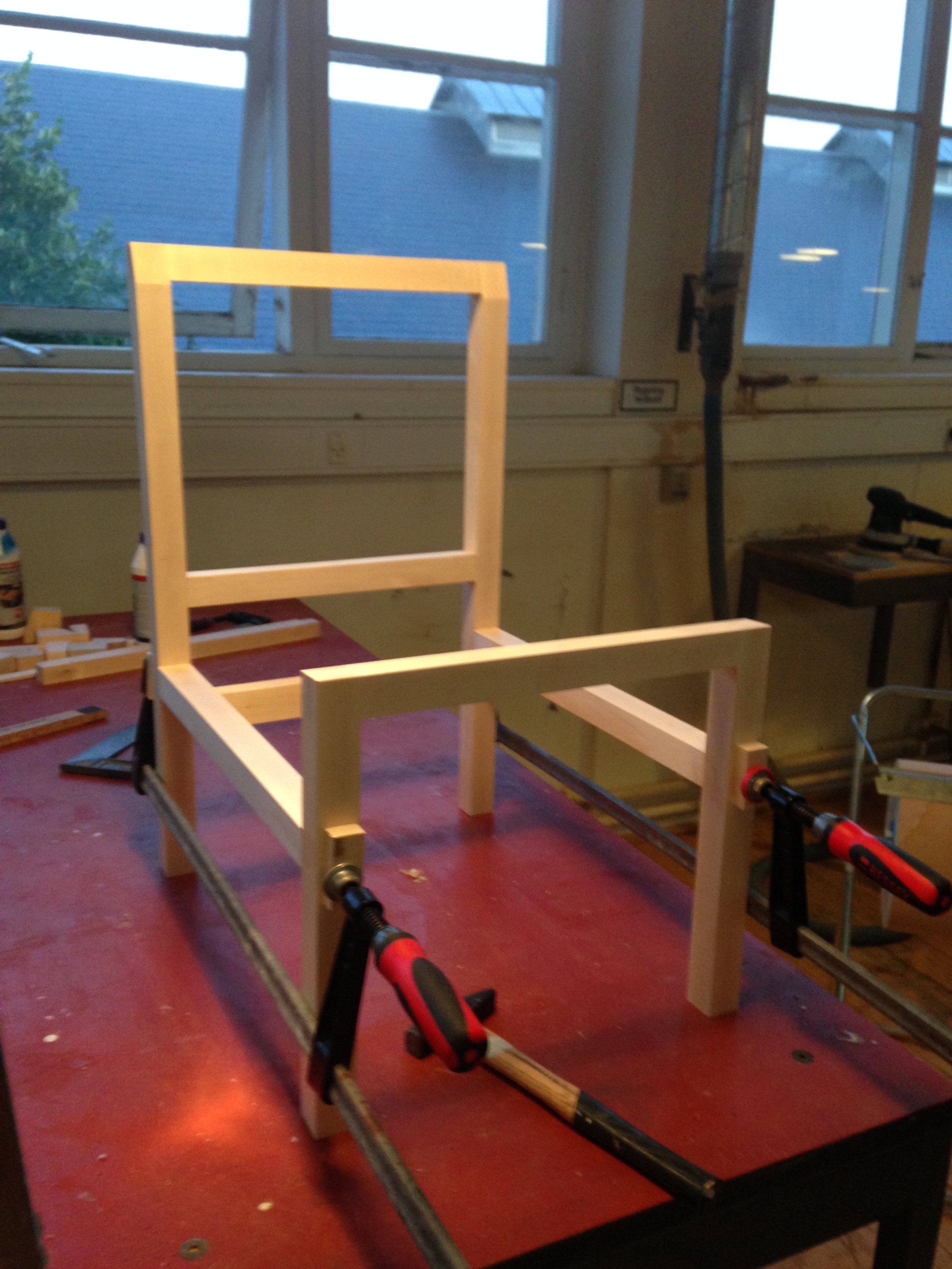
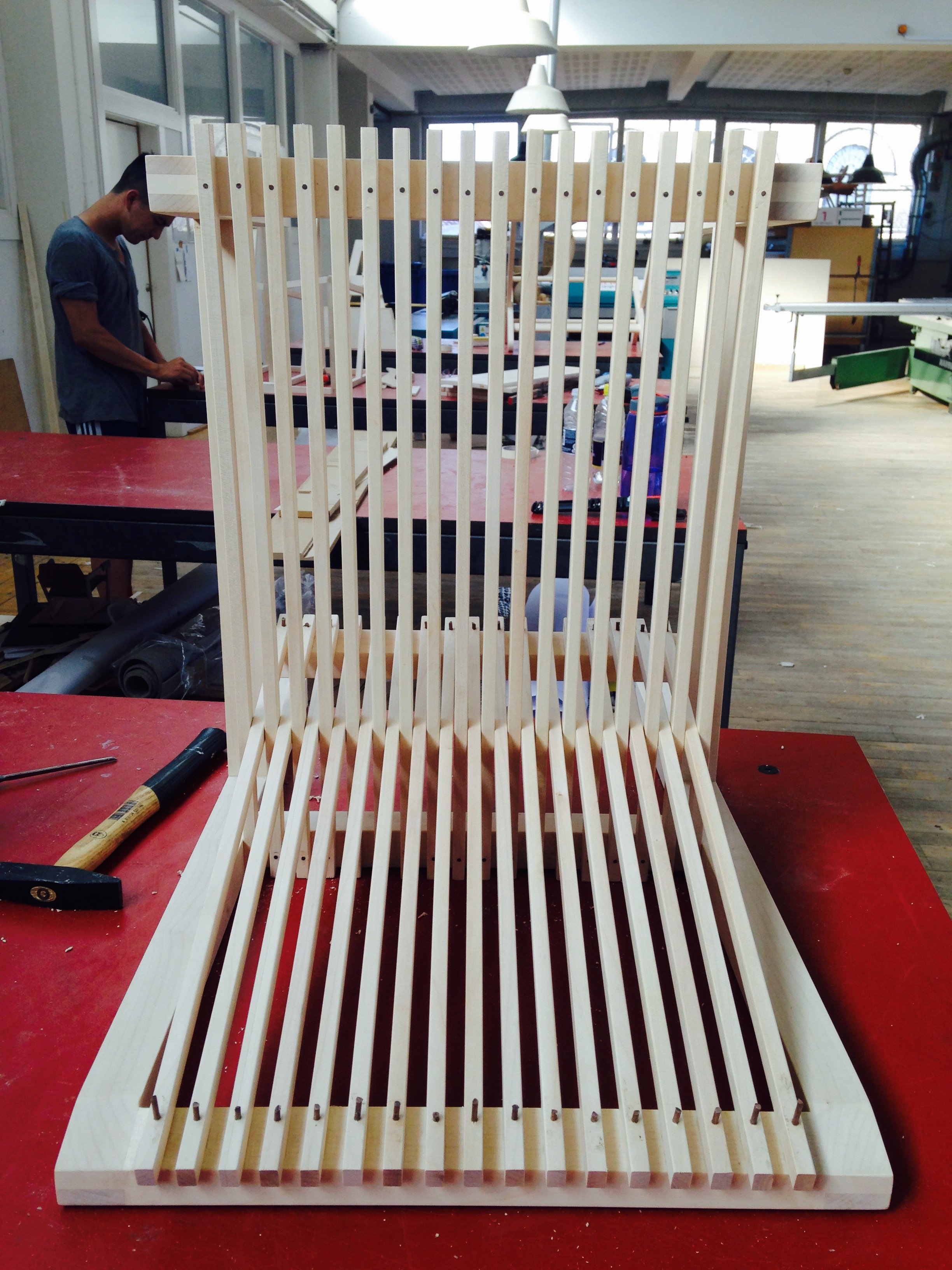
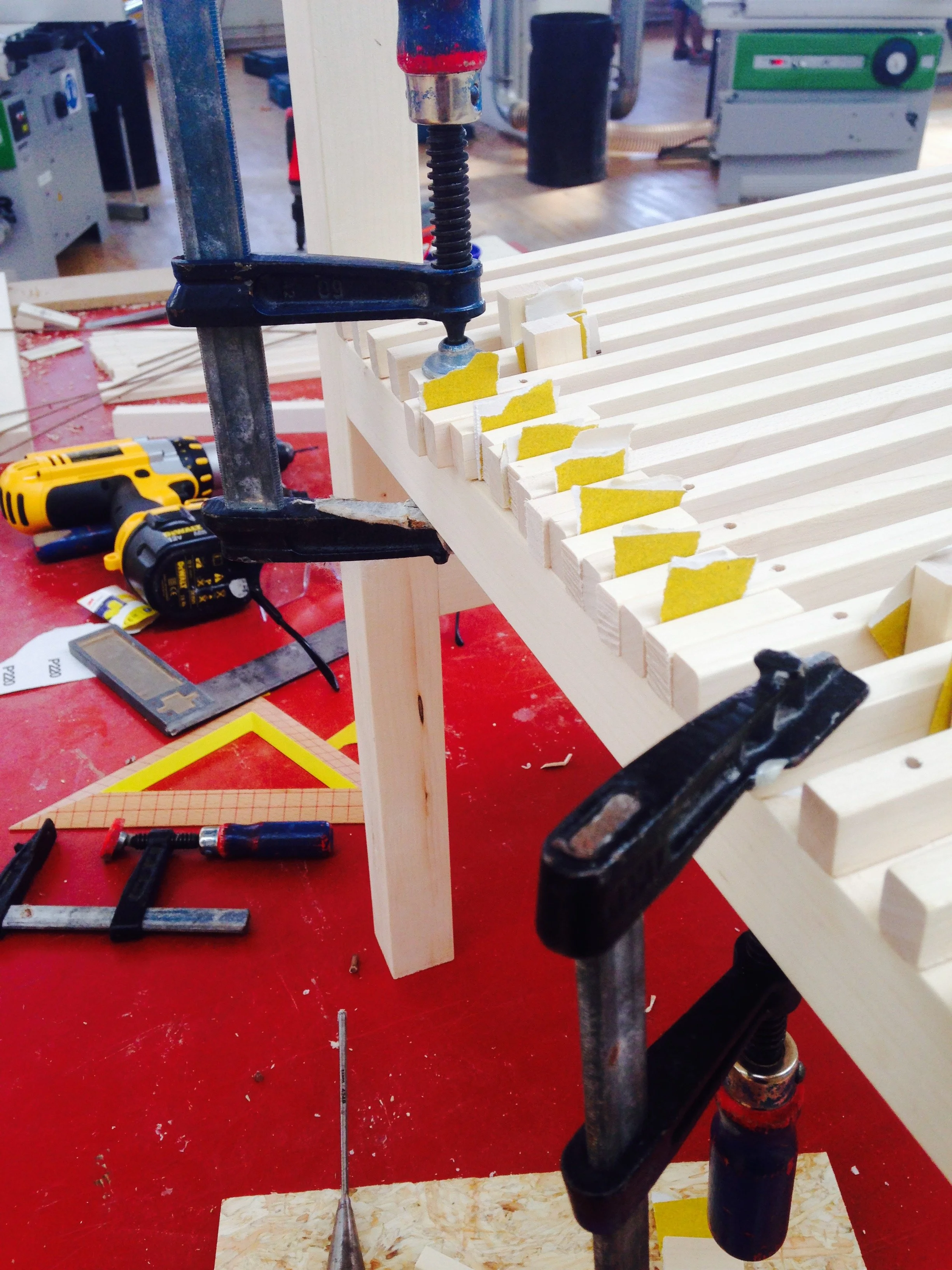
I had 2 weeks to start - and finish - building this chair. The biggest hurdle at this point was ensuring that the walnut dowel joinery for each seat and backrest plank was even. If one walnut dowel was out of place, it would have been painfully obvious. Thankfully, with extra attention and care, the final joinery was evenly spaced.